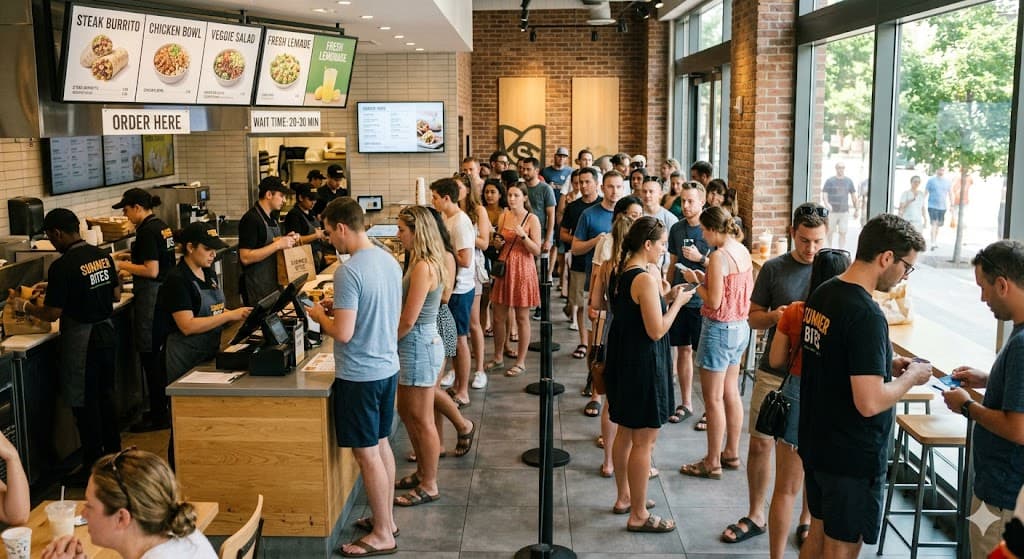

Summer doesn’t sneak up on restaurants. Operators know the volume is coming weeks in advance. They staff up, prep more, and push harder. And yet every year, the same thing happens: lines back up, ticket times stretch, and guests who might have become regulars walk out the door before they ever place an order.
The problem usually isn’t the kitchen. It’s everything upstream of it. Ordering infrastructure that was built for a normal Tuesday. Staff positioned where they’ve always been, not where peak volume actually needs them. Systems that work fine at moderate volume and quietly break down when covers spike.
Multi-unit operators who consistently outperform during peak season aren’t just working harder. They’re running tighter systems. Here’s what that looks like in practice.
1. Walk Your Locations Before the Rush Does
The best pre-season investment costs nothing but time. Walk each of your locations during a simulated high-volume period, ideally when traffic is already elevated, and map what you see. Where do guests naturally slow down after entering? Where does the line form when the lobby gets full? Where does the ordering process visibly stall?
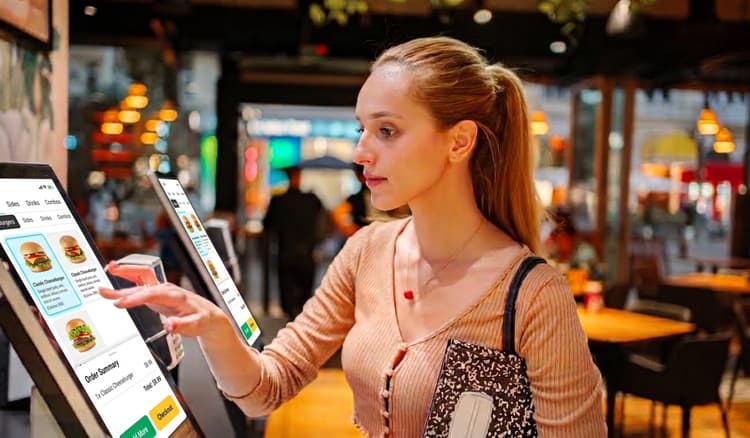
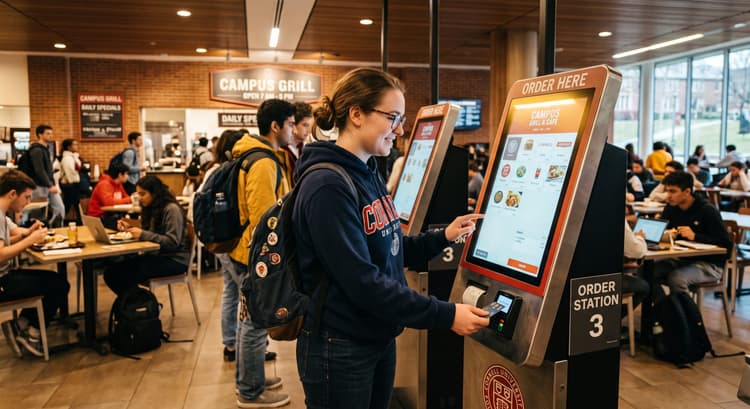
This matters especially for locations with kiosks. A kiosk that sits to the side of the natural guest flow gets ignored. One positioned at the point where guests decelerate after entering captures orders before a counter queue ever forms. Placement relative to entry traffic patterns has a direct impact on adoption—and adoption is what drives throughput at scale.
While you’re walking, evaluate signage and queue management too. These are consistently underdone. Guests who don’t know where to go don’t wait patiently while they figure it out, they get frustrated, they leave, or they create congestion that slows down everyone behind them.
2. Let Kiosks Handle Order Intake at Volume
Counter service has a structural limitation: it’s sequential. One guest orders, then the next. During a summer lunch rush, that constraint compounds fast.
Kiosks break the sequential bottleneck by letting multiple guests order simultaneously. The throughput math is straightforward: Four guests ordering in parallel move through the system faster than four guests waiting in line. That difference is manageable at low volume and significant when covers spike.
The industry has taken note. Shake Shack’s kiosks are now the brand’s largest and most profitable ordering channel, with kiosk checks running meaningfully higher than other in-store ordering channels—a result the chain attributed to smarter upsell sequencing through the kiosk experience. According to reporting from Restaurant Dive, a majority of QSR and fast casual guests now prefer kiosks over counter ordering when lines exceed four people—a figure that has grown significantly year over year.
For multi-unit operators still evaluating kiosk ordering ROI, peak season is the clearest test case available. The volume is real. The staff constraint is real. The question is whether your ordering infrastructure can keep pace with both.
3. Align Your Menu for Speed Before You Need To
A menu that performs well at moderate volume can become a throughput liability when summer traffic hits. Complex modifier flows, items with long prep dependencies, and poorly organized category structures all slow down the order process at the kiosk, at the counter, and in the kitchen. The effects multiply when every station is running at capacity.
Before peak season, run a practical audit. Which items drive the longest ticket times? Which modifications generate the most kitchen confusion or order errors? If you’re running summer LTOs, have those items been stress-tested at volume, or only at normal traffic levels?
On the kiosk side, this translates to deliberate merchandising decisions: which items are promoted in featured slots, how modifier screens are sequenced, and whether your default selections reduce friction or add to it. Small adjustments to item placement and modifier flow can meaningfully reduce average order duration without any changes to the menu itself. Bite’s Sales and Analytics Dashboard gives operators the item-level data to make those calls with confidence rather than gut feel.
4. Redeploy Your Team Toward Execution
When kiosks are handling a significant share of order intake, the labor freed from the counter doesn’t disappear; it shifts. The operators who get the most out of that shift are intentional about where the capacity goes.
The highest-value redeployment during peak season is toward execution: food prep, expo, and guest experience. These are the roles where speed and accuracy have the most direct impact on throughput and satisfaction, and they’re also the roles that get stretched thinnest when volume spikes. A team member who would otherwise be managing a register queue can instead focus on keeping the kitchen moving, which is where the actual bottleneck usually lives.
QSR operators increasingly view kiosk deployment as a way to improve labor flexibility, not reduce headcount. It’s a framing that holds especially during summer, when you may be onboarding seasonal staff with limited experience. Limiting new hires’ exposure to high-stakes, high-error roles at the counter while kiosks handle ordering is a meaningful risk management decision, not just a staffing one.
5. Build a Daypart Strategy Around Your Actual Peak Windows
Not all summer volume looks the same. Tourist-adjacent locations see different traffic patterns than commuter corridors. Dinner daypart extends significantly in summer, particularly near outdoor venues, retail districts, and recreation areas. Weekend volume profiles can look almost nothing like weekday ones.
Treating “summer” as a single operational condition misses the specificity that matters. Pull your transaction data by daypart, day of week, and location. Find where throughput consistently degrades—not just which locations are busy, but when and why the system slows down at each one.
Peak season rewards preparation. Operators who treat summer as a systems problem—not just a staffing problem—come out of it with better margins, better guest scores, and an operational playbook that holds up well beyond Labor Day.
If you’re evaluating how kiosk technology can support throughput and consistency across your locations, request a demo to see what Bite makes possible.