
Peak season fills seats. But filling seats doesn’t automatically mean better margins. For multi-unit operators trying to maximize restaurant revenue during peak season, that gap is where the real work happens.
The operators who grow revenue during their busiest months have figured out something important: volume creates opportunity, but only if your systems are built to capture it. More covers moving through your locations generate more chances to grow the check, introduce a premium add-on, and push a high-margin item. Miss those moments consistently across hundreds of orders, across dozens of locations and you’ve left meaningful revenue on the table during the period you could least afford to.
Here’s how the best operators close that gap.
High Volume Is When the Human Upsell Breaks Down
There’s a counterintuitive reality about peak season that most operators recognize but rarely address directly: the busier your locations get, the less reliable your staff-driven upselling becomes.
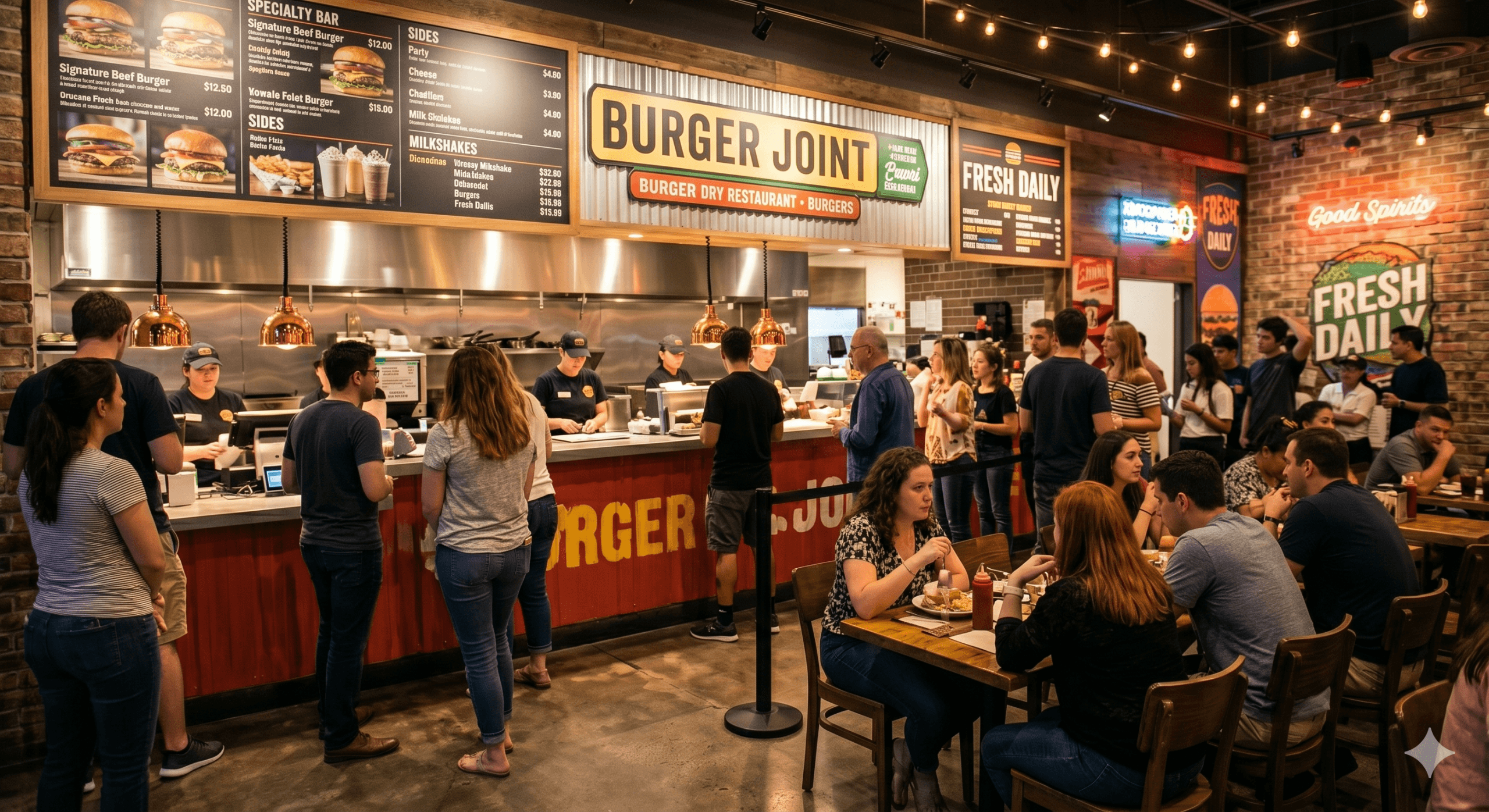
When a line stretches to the door, and a team member is focused on moving guests through as fast as possible, suggestive selling is the first thing that goes. It’s not a training failure—it’s physics. A cashier managing a lunch rush doesn’t have the bandwidth to work through a thoughtful upsell opportunity for every order. They take the order, process the payment, and move on. It’s the right call for throughput. It’s a quiet revenue leak at scale.
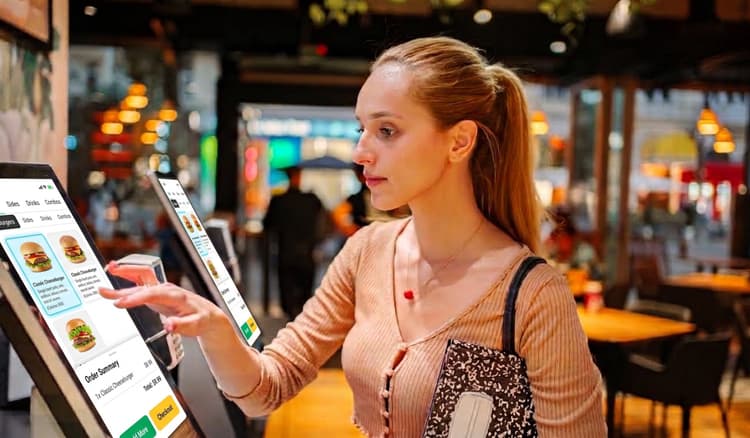
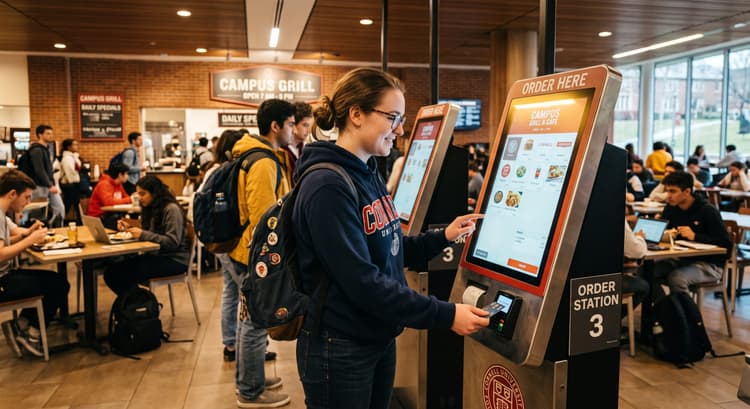
This is precisely why peak season is the highest-leverage moment for kiosk upselling. The kiosk doesn’t experience a lunch rush the same way a team member does. It surfaces the same well-configured upsell prompt on the 400th order as it did on the first, consistently, without fatigue, and without skipping steps when the lobby fills up. That consistency is where the revenue case for kiosk technology is most concrete.
What Kiosk Upselling Actually Does to the Check
The check lift data on kiosk ordering is well established at this point. Industry operators report average check increases from kiosks ranging from 15 to 30 percent, depending on whether the kiosk experience is optimized for speed of service or upselling, according to QSR Magazine’s coverage of operator deployment data.
The act is straightforward. Kiosks surface add-on prompts at the moment of highest purchase intent—after the main item is selected, and before the order is confirmed. They don’t rely on a team member remembering to mention the side, the upgrade, or the seasonal add-on. They do it every time, for every order, based on what the guest has already selected.
Yum Brands CFO Christopher Turner said in a 2023 earnings call: “Kiosks not only drive a higher check compared to our traditional front counter, but also drive higher margins through operational efficiencies and generate new opportunities to leverage customer data and create personalized ordering experiences.”
Restaurant Dive’s coverage of that call is worth reading in full for the broader context on where major chains are placing their bets.
Bite operators consistently see 20%+ average check lift across their kiosk deployments—a figure that reflects both upsell attachment and the broader effect of guests spending more time with the menu when they’re in control of the ordering experience.
The Upsell Logic Has to Be Built for Performance, Not Just Presence
Not all kiosk upselling is equal. A kiosk that surfaces a random add-on, or promotes items without regard for contribution margin or prep time, isn’t capturing revenue—it just adds noise to the ordering experience.
The configuration of the upsell sequence matters enormously. During peak season, when kitchen bandwidth is constrained and ticket time is a variable you can’t afford to ignore, the items you’re promoting at the kiosk need to pass two tests: they need to be high-margin, and they need to be fast. A summer LTO that takes four minutes to prep should not be the featured upsell during the lunch rush. A high-attachment add-on with a strong contribution margin that comes off the line in under a minute should be.
This is the problem Bite Lift is built to solve. Rather than static upsell rules configured once and left alone, Bite Lift uses AI to match the right add-on to the right order at the right moment. It’s the difference between an upsell sequence that was smart at setup and one that stays smart as your menu, your traffic patterns, and your guest behavior evolve across the season.
For multi-unit operators, the additional value is consistency. Upsell logic configured at the brand level performs the same way at every location.
Use Your Peak Season Data Before the Season Ends
Peak season generates more transaction volume than any other period, which means it also generates more data. Operators who aren’t actively mining that data mid-season are missing a competitive window that closes when traffic normalizes in the fall.
The most actionable analysis is straightforward: pull your item-level sales mix, your upsell attachment rates, and your daypart performance by location. Look for the gaps. Which items are being promoted but underperforming on attachment? Which locations are seeing strong check lift and which aren’t—and what’s different about each? Which dayparts are converting on upsell prompts and which are seeing guests skip past them?
Bite’s Sales and Analytics Dashboard surfaces this data at the org and location level, giving corporate and regional teams the visibility to make configuration adjustments mid-season rather than waiting for a post-mortem. The operators who come out of summer with better margins aren’t the ones who reviewed the data in September. They’re the ones who acted on it in July.
Peak season is the highest-leverage moment to close the gap between traffic and revenue. The volume is already there, but are the systems configured to capture it on every order, at every location, across every daypart? If you’re ready to see what that looks like in practice, request a demo, and we’ll show you how Bite operators are doing it.