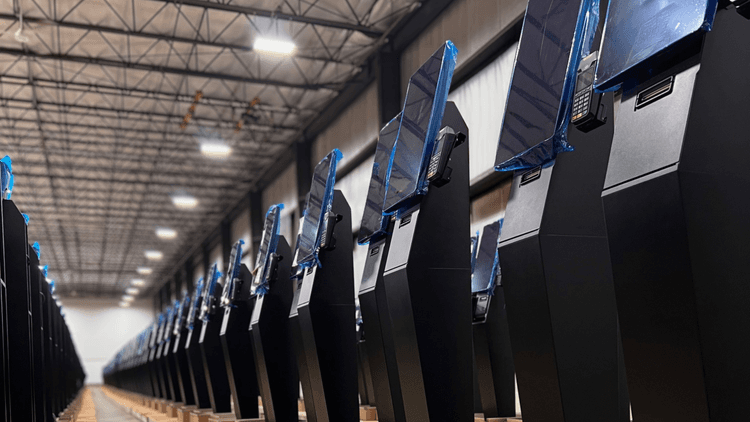
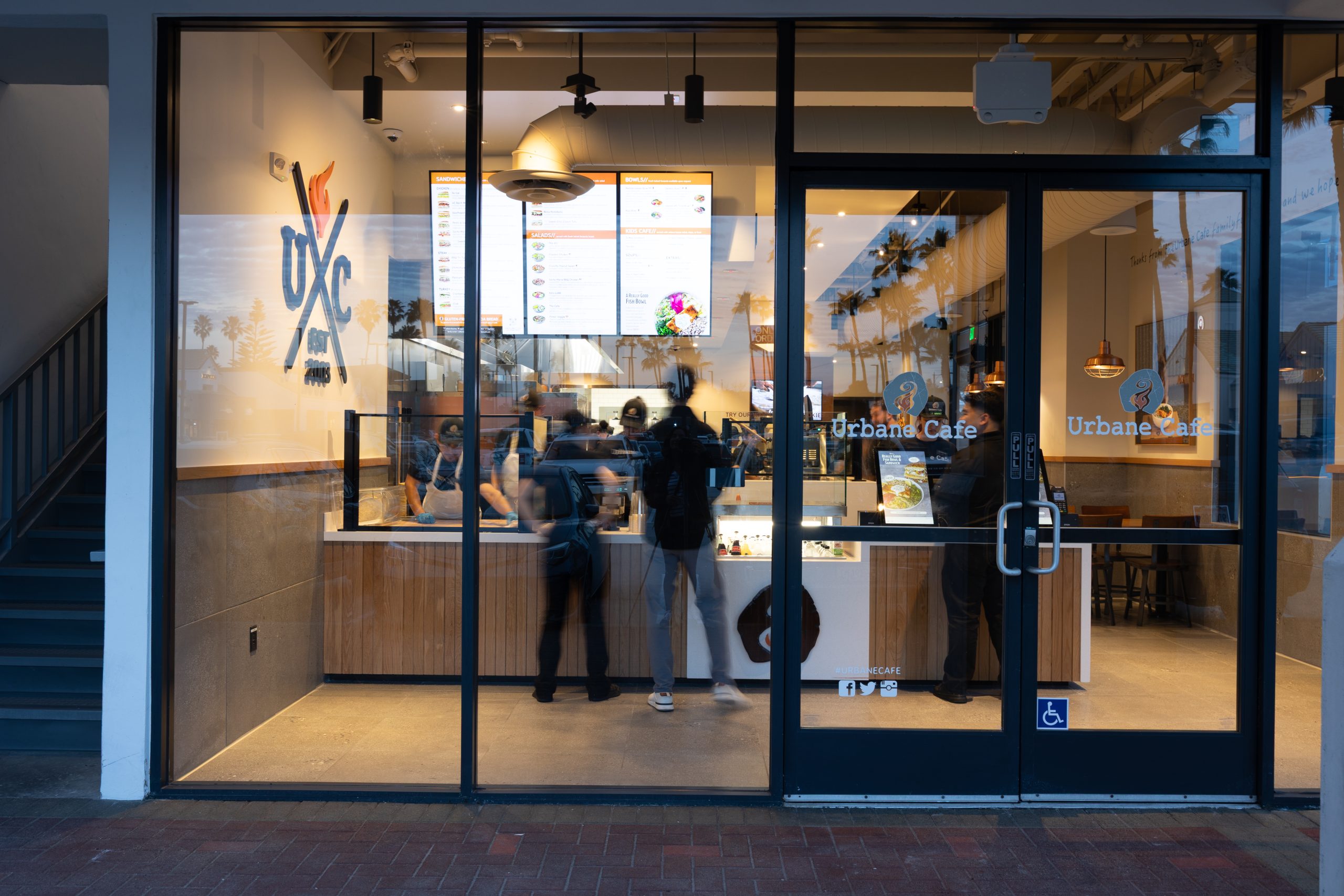

When operators evaluate AI upselling at the kiosk, a reasonable concern tends to surface early in the conversation: if the kiosk is prompting guests to add a side, upgrade a combo, or try a new LTO, doesn’t that add time to the order? And if it adds time to every order, doesn’t that create a throughput problem?
It’s a fair question. One the data answers clearly.
AI upselling at the kiosk doesn’t compete with speed. When configured correctly, it operates in parallel with it. Understanding why requires a look at where throughput actually improves in a kiosk-enabled environment—and what changes when order intake moves from the counter to a self-service channel.
Where Kiosks Create Speed
The throughput gains from kiosk ordering don’t come from eliminating the upsell. They come from shifting where order intake happens—and what that shift makes possible for the staff on the other side of the counter.
When a kiosk handles taking orders, front-of-house staff are freed from managing verbal ones, clarifying customizations, and processing payment simultaneously under pressure during peak hours. That cognitive load doesn’t disappear, it gets redistributed to a channel that handles it more efficiently, while staff redirects their energy toward fulfillment, food quality, and the guest experience at the handoff point.
The result is a more focused operation on both sides. Guests browse and order at their own pace without feeling rushed. Staff focus on what they do best. And the kitchen receives cleaner, more accurate orders that route directly from the kiosk without a verbal handoff that introduces errors.
QSR Magazine’s analysis of next-generation restaurant formats found that three out of four kiosk-enabled locations outperformed their legacy counter-service counterparts on overall order accuracy scores—and that technology-enabled ordering drove speed improvements for digital orders placed for pickup. Accuracy and speed improved together, not at each other’s expense.
Recent research underscores how sensitive the throughput economics actually are: reducing a customer’s wait time by just seven seconds can produce a 1% increase in sales. Every improvement in order flow efficiency has a direct, measurable revenue consequence. Which is why the operational shift that kiosks enable matters well beyond the technology itself.
Why Order Accuracy Is a Throughput Metric
One of the clearest throughput benefits of kiosk ordering is one that often gets framed as a guest satisfaction story: order accuracy.
According to Qu’s 2025 State of Digital Restaurant Report, nearly 70% of enterprise restaurant brands cite order accuracy as their single biggest efficiency challenge. A 2025 QSR Drive-Thru Report adds important context: 62% of incorrect orders trace back to customization errors—precisely the kind of miscommunication that self-service ordering eliminates structurally, because guests input their own specifications rather than relaying them verbally.
Every incorrect order is a throughput event. A re-fire consumes kitchen capacity. A refund or comp requires staff intervention. A remade order adds time to fulfillment for the guest who ordered correctly behind it. Accuracy improvements at the order-intake stage don’t just improve guest satisfaction, they reduce the operational drag that slows the entire fulfillment chain.
In fact, order accuracy is demonstrably higher when guests place their own orders—a finding that reflects the straightforward logic of removing the verbal handoff from the equation entirely.
The Upsell Prompt and the Order Flow: What the Data Shows
The concern that upsell prompts add meaningful time to a transaction assumes that the prompts are interruptive, multi-step, or poorly designed. That assumption holds for a badly configured upsell flow. It doesn’t hold for well-built AI upsell logic.
A well-configured prompt is a single, contextually relevant suggestion that appears at the natural moment in the ordering flow—after the primary item is selected, before payment. It takes a guest a second or two to accept or dismiss. It is not a negotiation. It requires no staff involvement. And because it’s integrated into the ordering sequence rather than appended to it, it doesn’t extend the transaction in any meaningful way.
The more important comparison is not between a kiosk upsell and no upsell. It’s between a kiosk upsell and a human upsell at the counter. An Intouch Insight study found that digital channels executed upsell prompts 71% of the time, compared to 58–60% for human staff at the counter and drive-thru.
The reason? Human upselling is inconsistent by nature. Staff execute it differently depending on the shift, the volume, and their individual training and confidence level.
The kiosk upsell doesn’t vary. It executes on every transaction without adding the interpersonal friction that can make counter-based upselling feel uncomfortable for both staff and guests.
Check Average Lift: The Revenue Side of the Throughput Story
The speed and accuracy benefits of kiosk ordering are well-established. Higher check averages are equally compelling, and the two outcomes reinforce each other rather than trade off.
According to PAR Technology’s 2025 QSR Operational Index, kiosk check averages have grown faster than counter checks since 2021, outpacing counter check growth by a meaningful margin. The report attributes this directly to the consistent upsell execution that digital ordering enables—a finding that echoes across the industry.
Restaurant Dive’s reporting on Shake Shack’s kiosk performance captures the dynamic clearly: the company’s kiosk channel now accounts for over half of its in-restaurant sales. CFO Katie Fogertey has credited deliberate investment in upsell configuration, offering contextual prompts for additions like an extra patty or bacon, as a key driver of kiosk checkout performance versus the counter. Shake Shack’s results were not a byproduct of the technology alone. They were the result of thoughtful configuration of that technology.
For brands that partner with Bite for their kiosk operations, the pattern is consistent. Crazy Bowls & Wraps, a fast casual chain that implemented kiosks using Bite Lift, reported a 38% increase in average order value—a result that reflects what well-configured AI upsell logic delivers when it’s built around the items and moments that actually move the needle on margin.
“Our partnership with Bite has been awesome. Our check averages for orders placed on the kiosks increased by 38%. We’ve also been able to reallocate our labor to better enhance the guest experience, resulting in a substantial improvement in our order accuracy.” — Kim Reitzner, Former COO of IT, Crazy Bowls & Wraps
The mechanism behind the lift is straightforward. Guests browsing at a kiosk encounter high-margin items with visual merchandising, clear pricing, and a low-friction path to adding them. They make that decision without the social pressure of a line behind them or the time pressure of a staff member waiting for a response. QSR Magazine notes that order accuracy and check size both improve when guests place their own orders and that kiosk orders consistently carry a higher margin than counter orders because the experience is designed to surface higher-margin items alongside the primary order.
Configuring for Both Speed and Revenue
The operators who see the strongest combined throughput and check average results from kiosk upselling share a few common configuration principles.
Daypart awareness. Effective AI upsell logic reflects the purchasing behavior of the daypart. A breakfast prompt looks different from a dinner prompt in the items suggested, the visual presentation, and the price point. Generic upsell logic that doesn’t account for daypart performs below its potential on both conversion and relevance.
Prompt depth discipline. A single, well-placed suggestion outperforms three sequential prompts on every meaningful metric: conversion rate, perceived order speed, and guest experience. The goal is one frictionless moment of discovery per transaction, not a series of interruptions that make guests feel like they’re navigating an obstacle course.
Visual merchandising quality. High-quality imagery, clear pricing, and a single-tap acceptance path reduce both hesitation time and decision friction. When the visual presentation does the work, guests make faster decisions, which benefits both throughput and attachment rate simultaneously.
The Portfolio-Level Case for Consistent Execution
For a multi-unit franchise operator, the throughput and revenue arguments converge on a single outcome: consistency across locations.
A kiosk executes the same upsell logic on every transaction, at every location, across every shift. It doesn’t have an off day. It doesn’t skip the prompt when the lunch rush is heavy. It doesn’t execute differently at location 6 than it does at location 22. The performance that a well-configured kiosk delivers at your best location is the same performance it delivers at every location in the portfolio.
That consistency compounds significantly at scale. Across daily transaction volume, across 20 or 30 locations, across a full operating year, the revenue difference between consistent AI upsell execution and variable human-dependent upselling is substantial. Even when the per-transaction lift is modest.
The throughput gains compound the same way. Fewer order errors means fewer re-fires system-wide. Cleaner order intake means more efficient kitchen routing across the portfolio. Staff freed from order-taking means a more focused fulfillment operation at every unit, every shift. For operators who want to understand what that looks like in practice, request a demo to walk through your specific operation.