
The math is familiar: food costs are up, labor costs are up, and the consumer on the other side of the counter is increasingly resistant to paying more. For QSR and fast casual operators, the instinct is to raise prices—but that instinct is now running headfirst into a market that has started to push back hard.
According to Placer.ai, lower- and middle-income consumers have been pulling back from QSR and fast casual chains they perceive as expensive, shifting their spend toward value grocers, warehouse clubs, and convenience stores. Research indicates that 44% of lower-income consumers are dining out less than they did the prior year. One QSR analyst describes this moment as fast food having “crossed a psychological threshold”—what was once perceived as an affordable option no longer is for many households.
For a multi-unit franchisee operating 20 or 30 locations, that dynamic creates a specific problem. The margin pressure is real, but so is the risk of accelerating traffic loss by raising prices further. Raising prices to combat inflation risks pushing out more price-sensitive consumers. And in a category where traffic is already soft, that’s a trade-off most operators can’t afford to keep making.
The question, then, is not whether to protect margin. It’s how to do it without asking guests to pay more.
Value Isn’t What It Used to Mean
One thing the operating environment last year made clear is that value is not synonymous with price.
The operators that won in 2025 recognized that value is a calculation of price combined with innovation, not just lower price points. Consumers increasingly focus on value through portion size, experience, or perceived quality, and they’re willing to spend if the overall transaction feels worth it.
That distinction matters for how multi-unit operators think about growing revenue per transaction. The goal isn’t to charge more for the same thing. It’s to increase the perceived value of the order—and the actual ticket—by introducing items and combinations that guests genuinely want, at a moment when they’re ready to say yes.
That’s a fundamentally different problem than pricing strategy. And it requires a different tool.
The Check Average Lever Most Operations Are Leaving on the Table
For most QSR and fast casual operators, check average growth has historically depended on two levers: menu price increases and labor-driven upsell at the counter. The first lever is under pressure. The second is inconsistent at best.
Counter-based upselling is subject to human variables—shift fatigue, training quality, rush-hour volume, and turnover. A well-trained team member on a slow Tuesday afternoon is a different upselling engine than an undertrained new hire during a Friday lunch rush. Multiply that variance across 20 or 30 locations, and the revenue opportunity is vast but largely uncaptured.
The data illustrates the gap clearly. According to QSR Magazine, restaurant customers who interact with self-service kiosks typically purchase 10 to 30% more than those who order from employees. The dynamic is well understood. Guests browse at their own pace, encounter high-margin items presented with visual merchandising, and make additions without the social friction of feeling rushed at a counter. The kiosk doesn’t apply pressure—it creates the conditions for discovery.
What the Numbers Show for Well-Configured Kiosk Upselling
The check average lift from kiosks is well-documented. Industry data consistently points to kiosk orders running meaningfully higher in value than counter orders, with variance depending largely on how well the upsell logic is configured.
A Shake Shack case study is one of the most instructive. Per Restaurant Dive, Shake Shack’s kiosks became its largest and most profitable ordering channel, with kiosk checks running higher by a high-teens percentage than checks in other in-store order channels, according to CFO Katie Fogertey on the company’s Q1 2024 earnings call.
As Restaurant Business Online reported, when guests order via kiosk, checks tend to be higher because orders are more likely to include premium LTOs and add-ons; guests also tend to attach a beverage and then eat in-restaurant, which further improves margin by reducing packaging costs.
Shake Shack’s results were not accidental. Its digital marketing team developed more effective ways to guide guests through the kiosk ordering experience by offering upselling options like adding an extra burger patty or bacon—deliberate configuration choices that translate directly to higher contribution margin per transaction.
For Bite customers, the results reflect a similar dynamic. The Original ChopShop, a fast casual chain that implemented kiosks using Bite Lift, reported a 15% increase in average check size—an outcome that illustrates what thoughtfully configured AI upselling can do at the point of sale.
CASE STUDY
Learn how Original ChopShop increased check size and loyalty penetration with Bite
The fast casual neighborhood eatery implemented Bite kiosks across its locations. The results were worth it. Higher check averages, and more loyalty use. A win-win. Read the case study to learn how.
Read The Case Study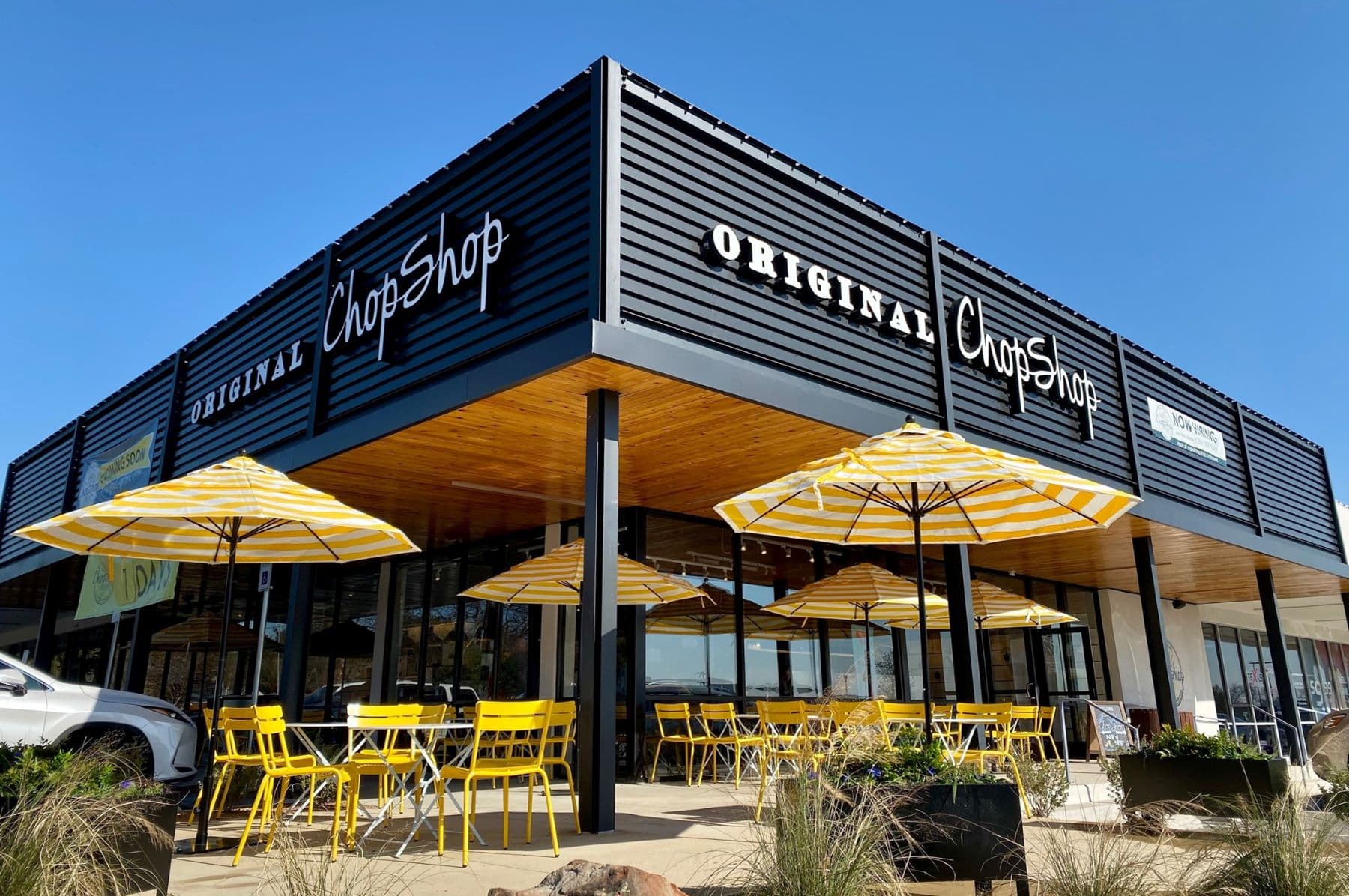
Why AI Upselling Beats Menu Price Increases as a Margin Strategy
The contribution margin math here is important. A menu price increase lifts revenue per item but risks volume erosion if guests trade down or visit less frequently. An AI-driven upsell that attaches a high contribution margin beverage or side to an existing order captures incremental revenue without changing the price of anything on the menu—and without triggering the value perception problem that price hikes create.
QSR Magazine notes that kiosk orders typically carry a higher margin than counter orders because the kiosk experience is designed to drive not only check average, but also the sales of higher-margin menu items. That’s the key distinction: the lift isn’t just in ticket size, it’s in the composition of what’s being sold.
Consider what that means across a portfolio. If an operator running 25 locations improves upsell attachment rate by a modest margin at each kiosk, the compounding effect across daily transaction volume and operating days is substantial. All without a single menu price increase.
The Consistency Problem at Scale
For a regional franchisee operating across multiple locations, the check average problem is rarely about any one unit. It’s about variance. A kiosk at location 1 that surfaces the right upsell prompt at the right moment generates a materially different revenue outcome than a kiosk at location 14 with outdated merchandising logic and a poorly sequenced add-on flow.
Unlike verbal ordering, where upselling depends on employee training and consistency, kiosk-based upselling is standardized by design. That standardization creates controlled experimentation environments where operators can test menu placement, bundling strategies, and item sequencing in ways that were previously impractical in a counter-service setting.
That’s not just a performance advantage. It’s an operational one. Consistent upsell execution across locations means the revenue opportunity isn’t gated by which crew member is working, which manager prioritized training last month, or how busy the lunch shift happened to be.
For multi-unit operators, that consistency is the point.
What Good Kiosk Upselling Looks Like in Practice
Not all kiosk upselling is created equal. The difference between a well-configured AI upsell flow and a poorly designed one shows up directly in attachment rates and in guest experience.
Effective AI upsell logic at the kiosk shares a few characteristics.
- Context. The prompt for a breakfast daypart looks different from a dinner upsell, and the suggested add-on reflects what’s actually worth suggesting for the anchor item in the cart.
- Correct Sequencing. A single, well-placed suggestion outperforms three interruptions that feel like pressure.
- Visual merchandising. High-quality imagery and clear pricing reduce friction and increase conversion.
Bite Lift is built around exactly this kind of precision. Rather than generic “would you like to add a drink?” logic, Bite Lift surfaces item-specific prompts calibrated to what each guest is already ordering—and it does so consistently, at every kiosk, across every location in the portfolio. The result is upsell performance that compounds across transaction volume in a way that counter-based upselling never reliably could.
The Margin Equation for 2026
The operators who will protect and grow margins in 2026 are not the ones who raise prices until guests stop coming. They’re the ones who find smarter ways to capture revenue per transaction from guests who are already there—guests who, as the research shows, are frequently open to adding something they weren’t planning to order.
In a traffic environment where winning new visits is expensive and uncertain, the incremental transaction is one of the highest-ROI opportunities available. AI upselling at the kiosk is the most reliable way to capture it—at scale, consistently, without touching menu prices. If you’re operating in QSR or fast casual and want to understand what that looks like in practice, request a Bite demo and see how Bite Lift performs across your locations.