
The numbers don’t lie: restaurants using AI-powered restaurant kiosks are seeing their average check sizes increase by 20-35%, with some locations reporting gains as high as 50%. Yet countless QSR and fast casual operators continue to rely on traditional ordering methods, essentially leaving thousands of dollars on the table every single day.
The difference isn’t just technology—it’s psychology, data science, and customer experience working together to transform how people order food.
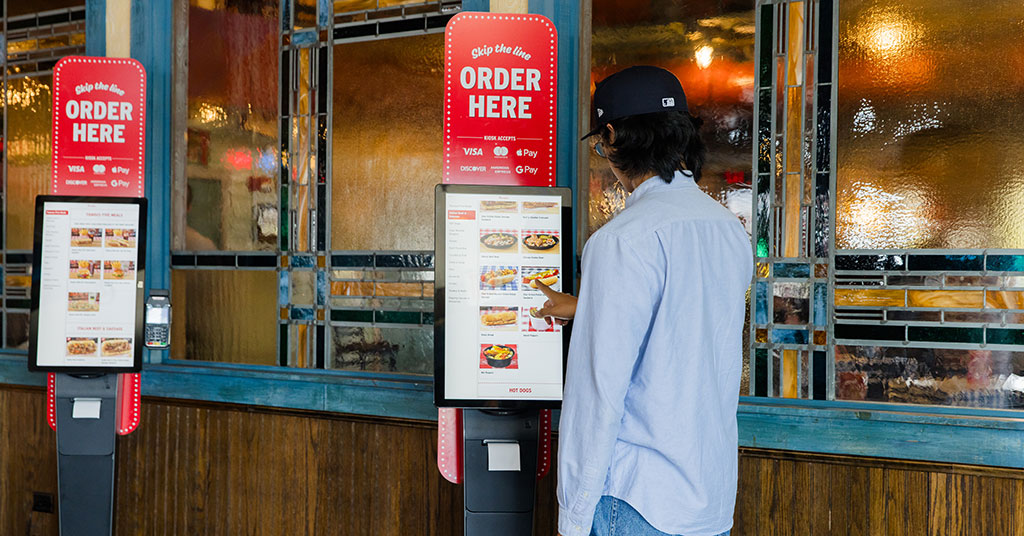
Kiosks don’t just benefit restaurants; they’re the preferred ordering method for consumers. According to a National Restaurant Association report, 84% of U.S. consumers like using self-service kiosks and 66% prefer them to checking out with an employee.
The Science Behind Higher Order Values
When customers interact with restaurant kiosks instead of human cashiers, something fascinating happens: they spend more money. But this isn’t accidental—it’s the result of carefully engineered AI systems that understand consumer behavior better than most restaurateurs realize.
Traditional cashier interactions are brief, often rushed, and limited by human memory and social dynamics. A busy cashier might forget to suggest an appetizer or feel awkward pushing a dessert on a customer who seems in a hurry. The result? Missed opportunities that add up to significant revenue losses over time.
AI-powered kiosks eliminate these constraints entirely. They never forget to suggest complementary items, never feel awkward about upselling, and can analyze ordering patterns in real-time to make personalized recommendations that customers actually want.
| Ready to stop leaving money on the table? Discover how Bite Lift’s AI-powered upselling can increase your average check size by 20% or more. The technology is proven, the ROI is clear, and your customers are ready for a better ordering experience.Get a Demo |
Real-World Revenue Impact: The Numbers That Matter
Consider the typical fast casual restaurant with 200 transactions per day and a $12 average check size. That’s $2,400 in daily revenue, or roughly $876,000 annually. Now, implement intelligent kiosks that increase the average check by just 25%—a conservative estimate based on industry data.
The transformation is immediate:
- Daily revenue jumps from $2,400 to $3,000
- Annual revenue increases by $219,000
- That’s nearly a quarter-million dollars in additional revenue from the same number of customers
For a small chain with five locations, this represents over $1 million in incremental annual revenue. For larger operators, the numbers become truly staggering.
How AI Upselling Creates Revenue Magic
The secret weapon behind these impressive gains is intelligent upselling technology like Bite Lift, which uses machine learning to identify the perfect moment and method to suggest additional items. Unlike static menu displays or random promotional pop-ups, AI-powered systems analyze multiple data points in real-time:
Customer behavior patterns: For example, the system could recognize that customers who order a chicken sandwich on Tuesday afternoons are 43% more likely to add fries when presented with a “Make it a combo” suggestion at the right moment in their ordering journey.
Seasonal and temporal preferences: AI identifies that cold brew sales increase 67% when suggested to customers ordering salads during lunch hours in summer months, but the same suggestion converts poorly in winter.
Order composition analysis: The technology understands that customers ordering multiple entrees (likely feeding a family) respond well to bulk appetizer suggestions, while solo diners prefer dessert recommendations after confirming their main course.
Visual Psychology: Why Digital Menus Drive Larger Orders
Beyond AI recommendations, the visual presentation of digital menus plays a crucial role in increasing QSR revenue. High-resolution food photography, strategic menu design, and dynamic pricing displays all contribute to higher order values.
Research shows that customers spend an average of 3.2 minutes browsing digital kiosk menus compared to 45 seconds looking at traditional menu boards. This extended engagement time directly correlates with larger orders. When customers can see appetizing images of menu items and explore options at their own pace, they’re naturally inclined to add more items to their order.
The psychology is straightforward: rushed decisions typically result in conservative orders (the familiar favorite), while relaxed browsing encourages exploration and additional purchases (that interesting appetizer they noticed, the limited-time dessert they want to try).
Fast Casual Profits: Beyond the Obvious Upsell
The financial benefits of restaurant kiosks extend beyond simple order value increases. Labor cost optimization represents another significant revenue stream. While kiosks don’t replace all staff, they allow restaurants to redeploy team members to higher-value activities like food preparation, quality control, and customer service.
A typical QSR location spending $180,000 annually on front-of-house labor can often reduce these costs by 15-20% while simultaneously improving order accuracy and speed. The labor savings, combined with increased average check sizes, can improve overall profitability by 30-40%.
The Compound Effect: How Small Increases Create Big Results
The beauty of AI-powered upselling lies in its compound nature. A 20% increase in average check size doesn’t just mean 20% more revenue—it often translates to 40-60% more profit due to the high margins on add-on items like beverages, sides, and desserts.
Consider these real-world scenarios from restaurants implementing intelligent kiosk systems:
Scenario 1: The Coffee Chain
- Pre-kiosk average order: $4.75 (primarily beverages)
- Post-kiosk average order: $6.20 (beverages plus pastries/snacks)
- Profit margin improvement: 52% (due to high-margin food additions)
Scenario 2: The Burger Joint
- Pre-kiosk average order: $8.90 (burger and drink)
- Post-kiosk average order: $11.45 (burger, drink, fries, and dessert)
- Customer satisfaction increase: 15% (more complete meal experience)
Implementation Strategy: Maximizing Your Kiosk ROI
Success with AI-powered kiosks isn’t automatic—it requires strategic implementation and ongoing optimization. The most successful operators focus on three critical areas:
Menu engineering for digital environments: Traditional menu layouts don’t translate directly to kiosk screens. Items need to be reorganized based on digital browsing patterns, with high-margin items strategically positioned for maximum visibility.
Staff training and integration: Kiosks work best when integrated seamlessly with existing operations. Staff need training not just on the technology, but on how to support customers who prefer assisted ordering while maximizing the benefits of automated upselling.
Data analysis and continuous improvement: The real power of AI systems like Bite Lift comes from their ability to learn and improve over time. Restaurants that regularly analyze performance data and adjust their strategies see continued improvement in average check sizes.
The Future is Now: Why Waiting Costs Money
Every day without AI-powered kiosks represents lost revenue that can never be recovered. While competitors implement these systems and capture larger order values, restaurants clinging to traditional ordering methods fall further behind.
The technology has matured beyond early adoption risks. Modern systems like those powered by Bite Lift offer proven ROI, comprehensive support, and seamless integration with existing POS systems. The question isn’t whether AI-powered kiosks will become standard in QSR and fast casual restaurants—it’s whether your restaurant will be an early adopter, capturing maximum benefits, or a late adopter playing catch-up.
The math is clear: AI-powered kiosks don’t just improve customer experience and operational efficiency—they directly and measurably increase revenue. For restaurants serious about growth and profitability, the time to act is now.