
How to maintain hospitality when guests interact with a screen first
The numbers tell a compelling story: 61% of consumers now want more kiosks in restaurants, up from just 36% two years ago. Kiosk-enabled locations report 30% higher average checks, 76% reduced wait times, and near-perfect order accuracy. By every operational metric, self-service ordering has delivered on its promise.
But there’s a number that should give every operator pause: kiosk friendliness scores dropped from 78% to 66% in just one year. Guests are ordering more, waiting less—and feeling increasingly invisible.
This is the fundamental tension of the kiosk era. Technology has solved for speed and efficiency. The challenge now is hospitality.
The Seven-Second Truth
Research consistently shows that guests form lasting impressions within seven seconds of entering a restaurant. Traditional service models were built around this reality—a host acknowledges you, makes eye contact, offers a greeting. That moment of human recognition signals: you matter here.
Now picture the modern QSR lobby: a guest walks in, scans the room, sees a row of screens, and starts tapping. No acknowledgment. No “welcome.” Just a transaction waiting to happen.
The kiosk has solved the operational problem of taking orders efficiently. It has not solved the hospitality problem of making guests feel seen. These are fundamentally different challenges—and operators who conflate them are watching their friendliness scores decline while their ticket averages climb.
The industry is beginning to recognize this gap. As Panera’s CEO, Paul Carbone, recently acknowledged, the brand’s perception has been “eroded by taking staff out of the restaurant.” His solution: ensuring guests have the choice of human interaction, not being forced to use a kiosk because there’s no one available to help.
The New Service Choreography
McDonald’s offers a blueprint for rethinking front-of-house roles in the kiosk era. Their Guest Experience Leader position exists specifically to bridge the gap between digital efficiency and human hospitality.
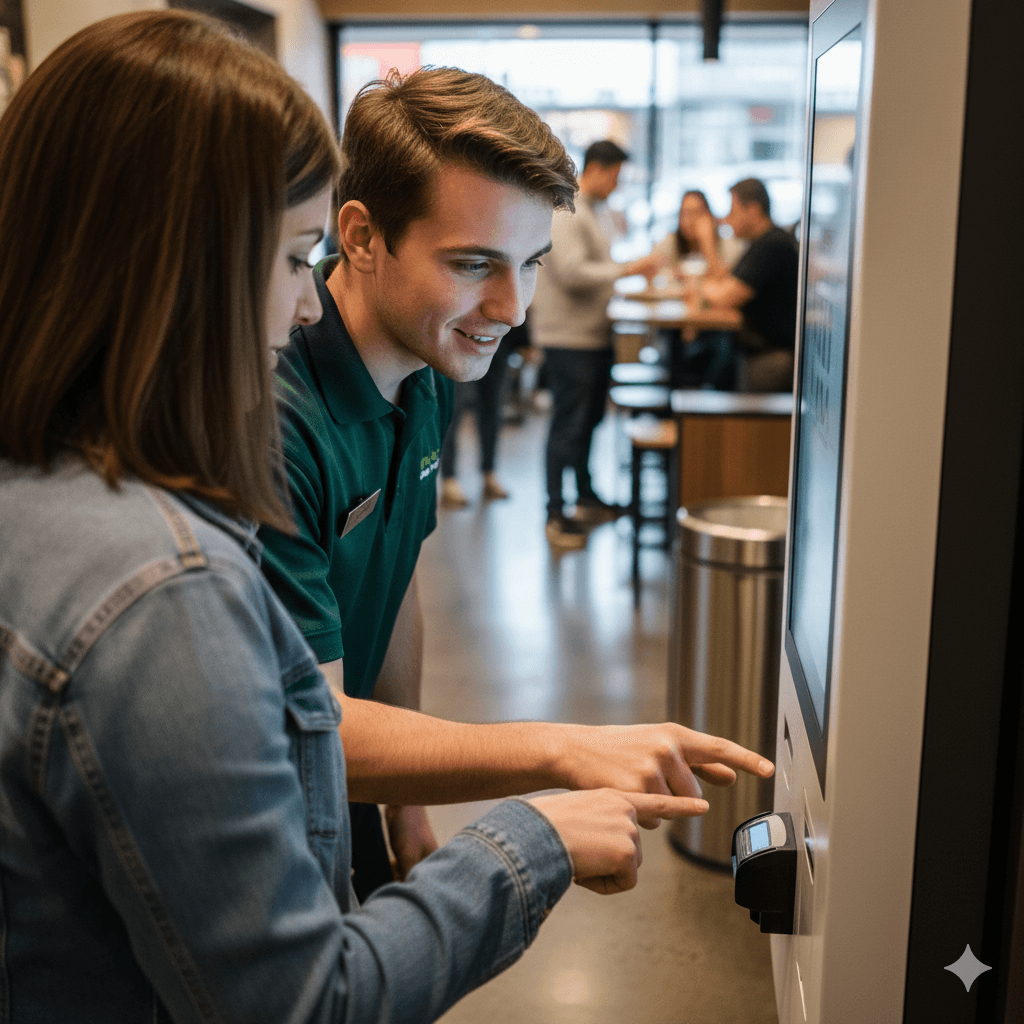
The role’s core responsibilities center on that critical first impression: greeting every guest upon arrival, serving as a “kiosk expert” who can guide unfamiliar users, and continuously checking in with guests throughout their visit. GELs are trained to be the “face of the restaurant”—hospitality ambassadors whose job is explicitly not taking orders.
This reframing is crucial. The traditional cashier role bundled two distinct functions: order-taking (transactional) and guest acknowledgment (relational). Kiosks handle the first; someone must still own the second.
Danny Meyer, whose Union Square Hospitality Group created Shake Shack, has long distinguished between “service” and “hospitality.” Service is the technical delivery of a product. Hospitality is how that delivery makes the recipient feel. Technology can improve service dramatically. Hospitality still requires the human touch.
Positioning for the First Impression
The physical layout of your kiosk zone directly shapes the guest experience. When kiosks cluster near the entrance with no staff presence, guests receive an implicit message: you’re on your own. When a team member is positioned to intercept arrivals before they reach the screens, the message changes entirely.
Consider the “10-4 Rule” that many hospitality organizations teach: within ten feet, acknowledge every guest with eye contact and a smile; within four feet, add a verbal greeting. This standard applies regardless of whether guests are heading to a kiosk or a counter—but it requires intentional staff positioning to execute consistently.
The goal isn’t to direct guests away from kiosks. Self-service ordering benefits guests who want speed and control over their experience. The goal is to ensure that the human moment happens before the digital moment. A simple “Welcome in! Let me know if you need any help with the kiosks” transforms the experience from a self-serve transaction to a welcomed visit.
Some operators have found success with a dedicated “lobby ambassador” role during peak hours—a team member whose sole responsibility is greeting, assisting first-time kiosk users, and maintaining the energy of the dining room. This represents a genuine reallocation of labor, not an addition: staff previously stationed at registers can now focus entirely on hospitality.
The Hybrid Service Model
The most sophisticated operators are rejecting the false binary between kiosk-only and counter-only service. Instead, they’re building hybrid models that let guests choose their experience while ensuring human touchpoints throughout.
This means maintaining visible counter service alongside kiosks, even if kiosk transactions are more profitable. When staff are visible and available, guests who prefer human interaction have that option—and guests who choose kiosks do so because it’s genuinely their preference, not their only choice.
Original ChopShop Sees Dramatic Check Increase & Loyalty Penetration After Implementing Bite Kiosks
Before implementing kiosks, Original ChopShop faced barriers to maximizing order value and customer engagement. Learn how Bite became the needed solution.
Read The Case Study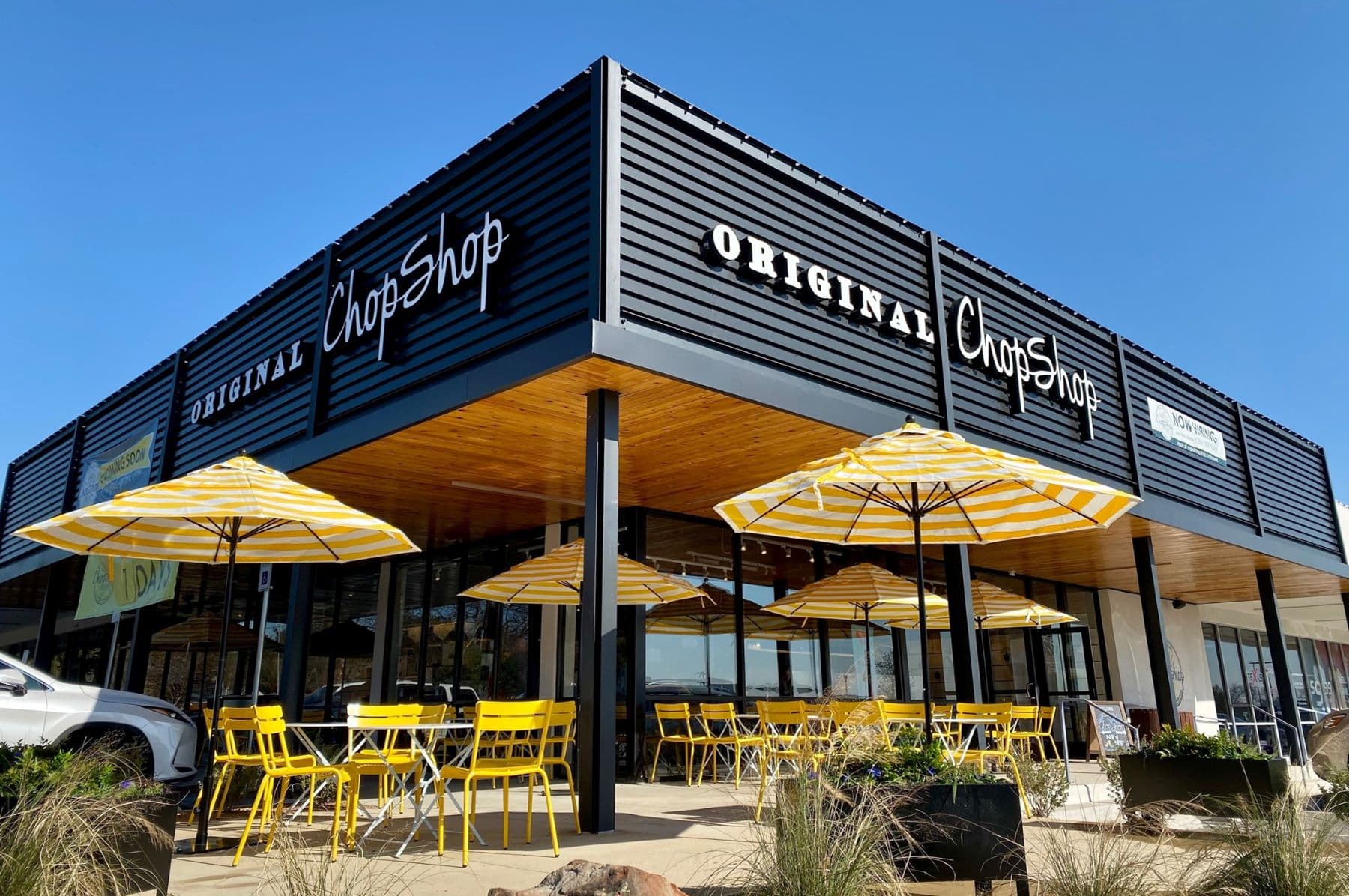
Shake Shack’s approach is instructive. Despite seeing 75% of in-store sales come through kiosks and digital channels in some locations, the brand maintains that “hospitality is at the center of everything we do.” Their kiosks supplement human interaction; they don’t supplant it.
The data supports this balanced approach. According to research from Qualtrics, Counter service still outperforms kiosks on satisfaction (85% vs. declining scores for kiosks). The winning formula appears to be kiosks for those who want them, counters for those who don’t, and proactive hospitality for everyone.
Practical Implementation
For operators looking to improve their kiosk-era hospitality, several principles emerge from the research:
Reframe the role, not the headcount. The opportunity isn’t reducing staff—it’s redeploying them from transactional to relational work. Team members freed from register duty can focus on greeting, table touches, and problem-solving.
Own the first 60 seconds. Train staff to acknowledge every guest within 30 seconds of entry, even during rush periods. A brief “Welcome, we’ll be right with you” prevents the invisible-guest problem that erodes satisfaction.
Position for interception. Place a team member between the entrance and the kiosk zone during peak hours. The physical layout should make human acknowledgment the first thing guests encounter, not the screens.
Assist without hovering. First-time kiosk users benefit from available help; experienced users want autonomy. Train staff to read cues and offer assistance without creating awkward surveillance.
Maintain the choice architecture. Keep counter service visible and staffed alongside kiosks. Guest preference should drive channel choice, not lack of alternatives.
The Irreplaceable Restaurant
The restaurant industry is entering what analysts call a new “innovation cycle”—one where the opportunity lies not in more automation, but in experiences that feel irreplaceable. Technology has solved for convenience. The differentiation now comes from hospitality, creativity, and human connection.
Kiosks aren’t going away. Their operational benefits are too compelling, and guest demand continues to grow. But the operators who thrive will be those who recognize that kiosks solve one problem while creating another—and who invest in the human infrastructure to address both.