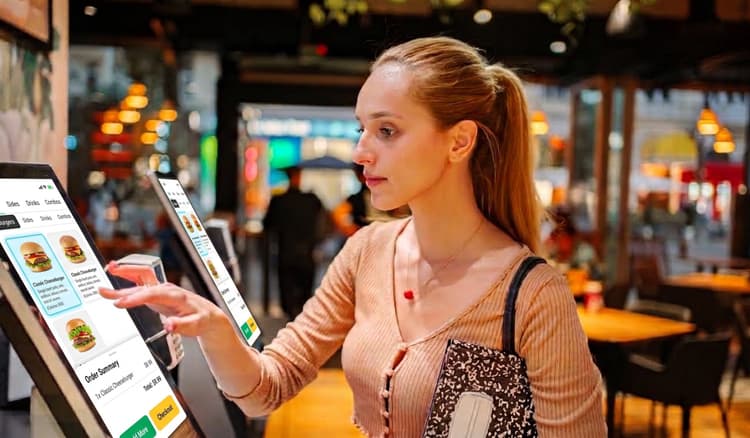

There are 72.2 million (about 21 percent of the U.S. population) living in the United States, and college campuses are some of the most Gen Z-dense environments anywhere. And as a generation, Gen Z has a very clear opinion about how they want to order food.
What’s happening in campus dining halls right now isn’t a niche story about university food service; it’s a preview of what QSR and fast casual operators will be managing across their broader footprint within the next few years. The ordering habits being built on campuses today are the customer expectations operators will be navigating everywhere tomorrow.
Campus Dining Is Under Real Pressure, And Technology Is Filling the Gap
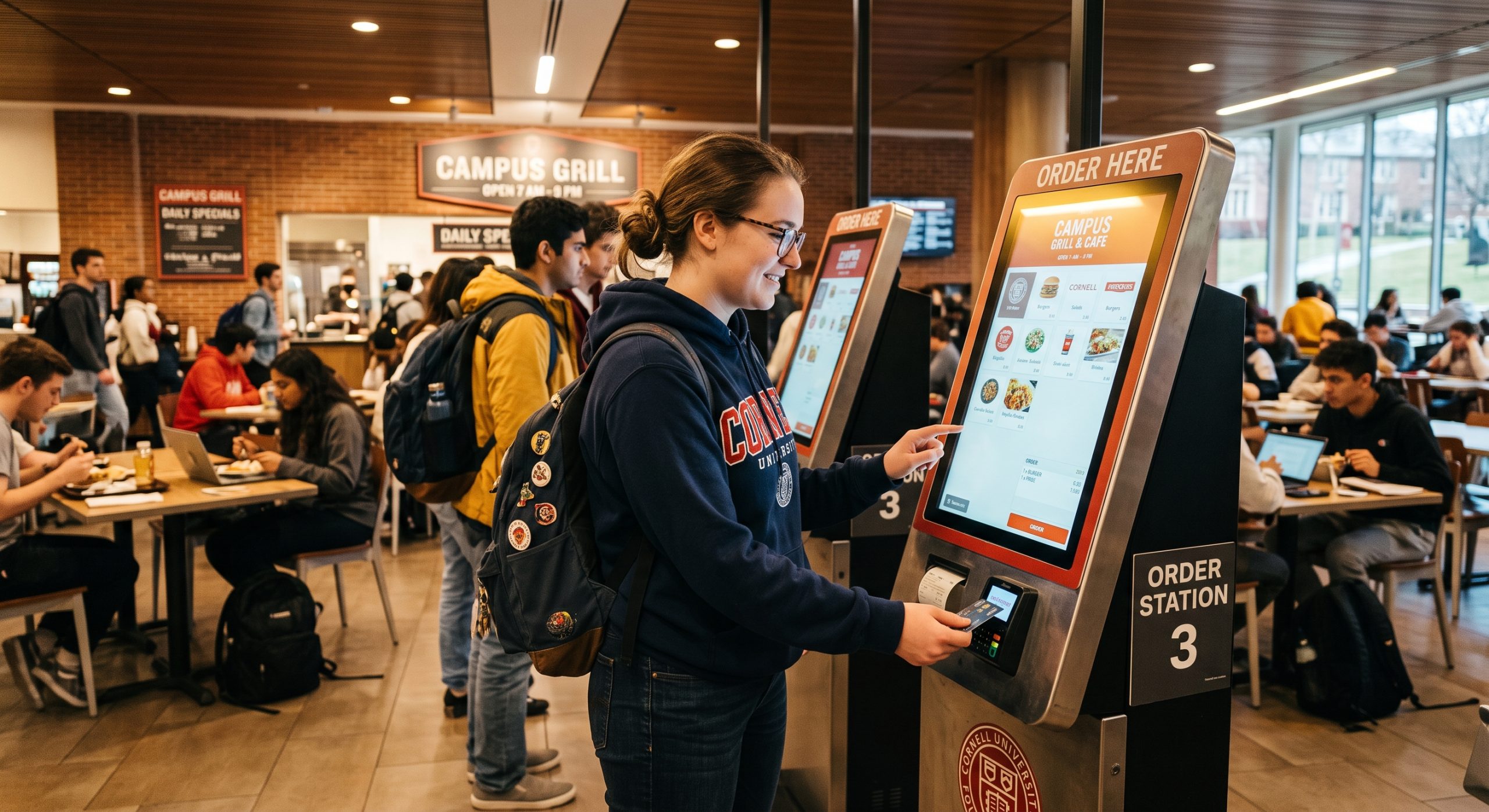
The numbers from campus dining tell an uncomfortable story for universities. Research from Grubhub Onsite shows that 60 percent of student food and beverage spending now happens off campus—up from just 30 percent a few years ago. Meanwhile, 36 percent of students aren’t using their meal plans at all. The traditional campus dining model is losing the student.
Universities are responding with significant technology investment. Self-service kiosks, digital ordering platforms, smart micromarkets, and automated food stations are expanding across residence halls, student centers, libraries, and athletic facilities. In recent years, major food service operators like Aramark, Chartwells, and Compass Group are all deepening their campus partnerships with tech-forward dining programs. Chartwells, for example, brought Chick-N-Bap, Halal Shack, and other emerging brands to Binghamton University this year under a kiosk-integrated dining model.
The labor dimension is familiar to anyone running a QSR operation. Campuses face the same staffing pressures that restaurant operators do, and kiosks are solving the same operational problem in both environments: maintaining throughput and service quality without requiring headcount that isn’t available.
Gen Z Doesn’t Just Tolerate Kiosks—They Prefer Them
This is the part brand operators should be paying close attention to. Gen Z’s preference for self-service ordering is a decisive one.
91 percent of Gen Z customers prefer restaurants that offer kiosk services. 67 percent specifically prefer self-order kiosks, compared to 41 percent of the overall population. The reasons track closely with what makes campus dining so well-suited to the format: students cite the ability to customize their order independently as the primary advantage, pointing to the reduced pressure of self-paced ordering—no one waiting behind them, no one rushing their decision.
On a busy campus, that matters even more. Students moving between classes have limited time and high expectations. A kiosk that lets them browse, modify, and pay in under two minutes isn’t a convenience—it’s the baseline they’ve come to expect. By comparison, the counter feels like friction.
This generation didn’t grow up thinking of counter ordering as the default. Digital interfaces are their default. The campus environment makes that preference more visible because the audience is so concentrated.
Campuses Are a Real-World Testing Lab for Brand Operators
There’s something uniquely valuable about the campus dining environment from a data standpoint. Traffic patterns are dense and predictable. The customer base skews heavily toward a specific demographic. And the ordering behavior is observable in a way that’s harder to isolate in a typical QSR location with a more varied guest mix.
What brands are learning on campuses: Gen Z audiences navigate menus visually, not verbally. They spend more time exploring customization options. They pay close attention to dietary and allergen information—and they expect it to be easy to find. They respond to featured items and visual merchandising in the kiosk interface in ways that translate directly into higher attachment rates on add-ons and upgrades.
Those behaviors don’t stay on campus. Brand loyalty formed in college travels. The ordering habits a student builds at 19 follow them into their careers, their neighborhoods, and eventually their families. Brands that are introduced to students in a kiosk-first environment—and that deliver a good experience there—are building relationships that extend well beyond graduation.
What This Means for Brand Operators Off-Campus
The Gen Z cohort currently moving through university dining halls will be the dominant QSR and fast casual customer base within the next five years. The preferences they’re developing now—for digital ordering, for customization, and for low-friction self-service—are not preferences they’ll grow out of.
For brand operators, a few practical implications follow from this.
Menu design increasingly needs to assume visual browsing, not verbal ordering. When a guest is navigating a kiosk screen rather than reading a board and talking to a cashier, item photography, clear descriptions, and intuitive layout do the selling. Operators who design menus for the counter and then port them to a kiosk are leaving performance on the table.
Customization options matter more than they used to. Gen Z’s preference for building their order—not just picking from a preset—is a real purchasing driver. Kiosk interfaces that surface modifier options clearly and make customization feel easy, rather than buried, consistently outperform those that don’t.
Dietary and allergen filtering has moved from a nice-to-have to an expectation. Campus dining has led on this because the population is diverse and vocal about it. The same expectation is arriving in QSR.
The Operational Payoff Is Happening Now, Too
The campus-to-QSR connection isn’t just a future story. The case for kiosk-first ordering is playing out in real numbers today. When guests control their own ordering experience, they spend more. Bite Lift, Bite’s AI-powered upsell engine, drives a 20 percent or greater increase in average check size across Bite’s customer base—a consistent result that reflects what happens when a guest has the time and the interface to explore their options without pressure.
Order accuracy improves. Labor efficiency improves. And the guest experience improves for the segment of customers—increasingly the majority—who prefer it.
The campus dining shift is already underway. Universities are investing in the infrastructure, food service operators are building the partnerships, and Gen Z is voting with their orders. The question for brand operators isn’t whether this shift is coming to their locations. It’s whether they’re building toward it now or planning to catch up later.
If you want to see how Bite helps brands build kiosk-first operations that are ready for where guests are headed, we’d love to show you at getbite.com/demo.