The Spring Menu Playbook: How Regional Franchise Operators Engineer Seasonal Profitability
At a brand with 10, 20, or 50 locations, the spring menu season looks a little different than it does at the unit level. You’re not designing the menu—corporate is. What you’re doing is something harder: executing someone else’s vision profitably, consistently, across a portfolio of locations with different volume profiles, different staffing realities, and different guest mixes.
That’s the tension most regional franchise operators don’t talk about openly. The spring LTO comes down from brand. The contribution margin target is yours to hit. The upsell strategy—if there is one—is often under-defined. And the data that would tell you whether any of it is working tends to live in systems that don’t talk to each other cleanly.
Spring feels exciting. For a regional operator managing margin across dozens of units, it also carries real risk if it isn’t approached analytically.
Here’s the argument: seasonal menu transitions are among the highest-leverage moments in a franchise operator’s calendar. Done well, they drive traffic, improve per-guest profitability, and generate location-level data that informs smarter decisions across the rest of the year. Done wrong, they create execution inconsistency across your portfolio—some units running the LTO well, others burying it—and burn operational bandwidth on items that never earn their place.
Most regional operators treat spring menu planning as an implementation exercise. The ones who outperform treat it as an engineering problem.
The Menu Engineering Framework, Applied at Scale
The menu engineering framework isn’t new—it was developed by Michael Kasavana and Donald Smith at Michigan State—but it’s underused at the regional franchise level, where operators often have access to more data than their single-unit counterparts but less freedom to act on it unilaterally.
Understanding the framework is still essential, because it shapes how you evaluate brand-mandated items against your actual portfolio performance—and how you make the case internally when something isn’t working.
The four quadrants:
Stars: high popularity, high contribution margin. Protect these. They’re the items your locations can’t afford to deprioritize in favor of a new seasonal push.
Plow Horses: high popularity, low profitability margin. These sell well and feel like wins. They often aren’t. At scale, Plow Horses that dominate the mix quietly suppress your average contribution margin per transaction across every unit.
Puzzles: low popularity, high profitability margin. These are the items that need your merchandising attention most—and in a kiosk or digital ordering environment, they’re the items most likely to be overlooked without active intervention.
Dogs: low popularity, low profitability margin. At the regional level, the ability to retire these may sit with brand—but the data case for doing so is yours to build.
The two metrics that drive the analysis:
Profitability/Contribution margin: selling price minus food cost per item. According to NRA data, food and beverage costs for limited-service operators ran a median of 32.4% of sales in 2024—useful context, but food cost percentage can obscure what actually matters at volume. A $14 item with $4 in food cost contributes $10 to margin. A $9 item at 28% food cost contributes $6.48. Across 40 locations doing hundreds of transactions a day, that gap is not theoretical.
Popularity index: an item’s share of total sales in its category, tracked per location. At the regional level, this matters not just in aggregate but as a consistency signal—wide variance in popularity index across locations often points to an execution or merchandising problem, not a product problem.
The spring relevance: every brand-mandated seasonal item should be run through this framework at the regional level before rollout—not to override brand decisions, but to inform how you price, position, and sell them across your portfolio.
The Spring Opportunity (And the Trap)
Spring is one of two annual windows—along with fall—when guests actively expect menus to change. That expectation is a genuine asset, and it operates at the brand level as much as the unit level. Guests who follow the brand are primed for something new. The regional operator’s job is to convert that priming into actual margin.
What the spring window makes possible at the regional level:
Phasing out underperforming items without guest friction—seasonal transitions give cover for removal that mid-year changes don’t
Introducing brand-designed LTOs with a local execution strategy that the brand hasn’t fully specified (more on that in Section 4)
Using the novelty of seasonal items to test upsell prompts and price attachment behavior across your portfolio—data that becomes proprietary insight for your group
Spring ingredients—asparagus, strawberries, lemon, peas, fresh herbs, lighter proteins—carry strong perceived value with guests. When sourced in season, they tend to support favorable margins relative to their perceived quality. That’s the brand’s sourcing call, but the margin benefit is yours to protect or lose in execution.
The trap at the regional level looks different from what it does for independent operators.
It’s not usually a failure to design the right items. It’s a failure to execute them consistently across locations. Three patterns show up repeatedly in regional franchise portfolios:
Inconsistent rollout across units. Some locations merchandise the spring LTO aggressively; others treat it like a footnote. The result is wide performance variance that makes it nearly impossible to evaluate whether the item itself works. You can’t improve what you can’t measure cleanly.
Treating the brand’s LTO strategy as the complete strategy. Brand provides the item, the pricing, and the promotional materials. What brand often doesn’t provide is a location-level upsell plan, a merchandising sequence for kiosk and digital ordering, or a defined evaluation framework. Filling those gaps is the regional operator’s leverage point.
Pricing drift at the unit level. In multi-unit portfolios, it’s common for individual locations to apply discounts, modify modifiers, or run local promotions that quietly erode the contribution margin of a brand-designed LTO. At 10 units, this is manageable. At 50 units, it becomes a significant margin leak if it isn’t actively monitored.
Get a Demo
Ready to close the execution gap this spring?
Request a demo of Bite Lift to see how AI-powered upselling drives consistent seasonal item performance across your portfolio.
Start with Your Portfolio Data, Not the Brand Playbook
The instinct at the regional level is often to wait for brand guidance before doing any planning. That’s an understandable instinct—and it leaves significant value on the table.
The data audit that should happen before any spring rollout begins is entirely within your control, and it shapes how you execute regardless of what brand provides.
The right questions to ask across your portfolio before spring planning begins:
Which locations have the highest average contribution margin per transaction, and what’s driving the difference? Understanding your top performers’ item mix tells you something about what to replicate in merchandising and upsell strategy.
Where do your current Stars and Plow Horses sit across locations? An item that performs as a Star at your top-volume units may be a Plowhorse at lower-volume locations. And that distinction changes how you merchandise it.
Which items consistently appear in multi-item orders? Attachment behavior varies by location and daypart, and that variation is information. A spring LTO that pairs naturally with a high-attachment item is a better upsell target than one that stands alone.
Are there daypart gaps that a spring item could address? A lighter spring offering that drives lunch traffic is more valuable to your portfolio than one that spikes on weekend dinner and fades by mid-week.
The kiosk advantage for regional operators:
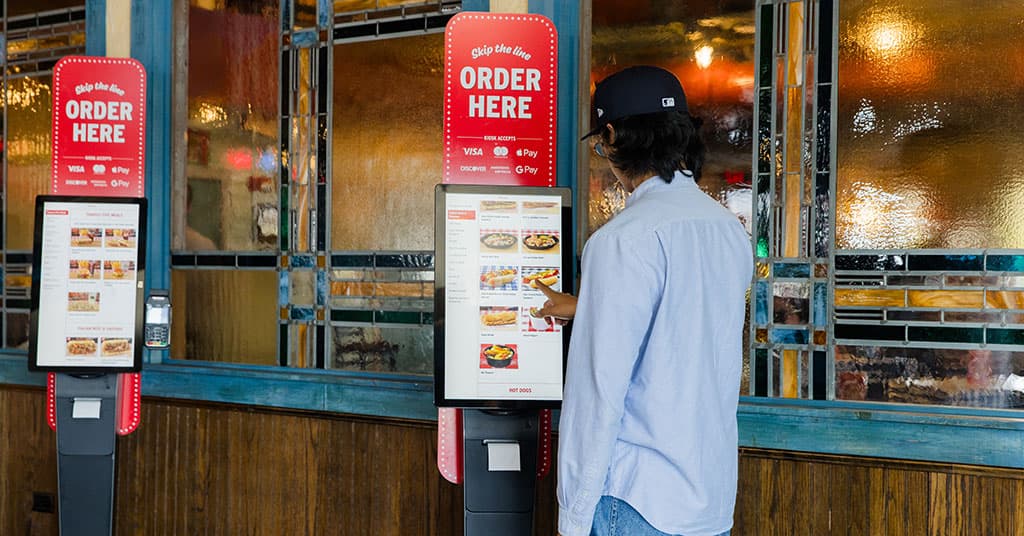
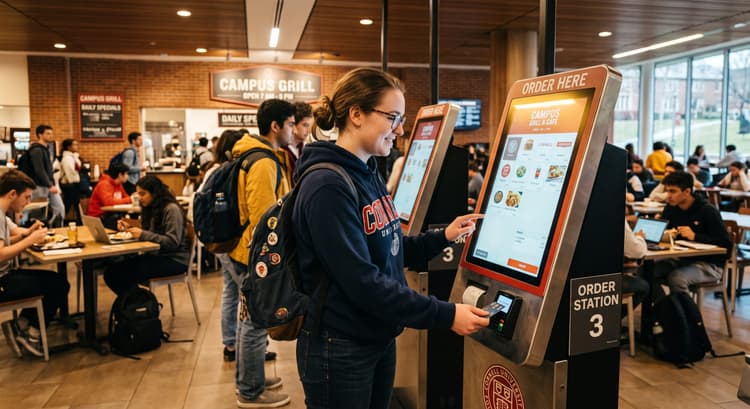
At 10–50 units, kiosk and digital ordering data are among the most valuable assets you have—and it’s often underused. Unlike verbal ordering data, kiosk data is structured, consistent, and captures behavior that aggregated POS data misses: what was browsed versus purchased, which add-ons were accepted at which locations, and how item placement on the screen affected sales mix across your portfolio.
This is the data foundation for informed spring planning. It’s also the input layer that Bite Lift uses to surface the right upsell at the right moment—not as a static prompt, but as a dynamic recommendation tuned to the guest, the item, and your margin priorities.
Building Your Execution Strategy Around Brand LTOs
The LTO environment across the industry right now is more competitive than it’s ever been. According to Technomic Ignite Menu data, LTO launches rose 19% year over year as of late 2025, with the full year tracking 10% above 2024. Technomic tracked 17,790 restaurant LTO launches in 2020; by 2024, that figure had grown to 36,830—more than double in five years. And 55% of consumers now say a restaurant’s LTO offerings factor into where they choose to eat, up from 50% in 2022.
For a regional franchisee, those numbers mean two things simultaneously: brand’s instinct to run seasonal LTOs is strategically correct, and the execution gap between operators who merchandise them well and operators who don’t is growing more consequential.
Where regional operators build their edge:
Operational preparation before launch, not after. Brand announces the spring LTO. The question to answer before it hits your locations: Does this item extend prep workflow in ways that create throughput risk at peak hours? If so, which locations are most exposed, and what’s the mitigation plan? The operators who ask these questions before launch are the ones who don’t spend six weeks watching a good item underperform because of a fixable execution problem.
A location-level merchandising plan. Research from Kerry found that 88% of consumers rated point-of-sale promotions as one of the three most influential purchase drivers for LTOs—making in-the-moment presentation a primary driver of LTO performance, not a secondary one. Brand may provide creative assets—the question is whether those assets are being deployed at every location, in every relevant touchpoint, with the same consistency. In a 50-unit portfolio, the answer is seldom yes without active oversight.
Pre-defined evaluation criteria. Before a spring LTO launches across your portfolio, define the benchmarks: What sales volume justifies the operational complexity? At what contribution margin does the item earn a permanent recommendation to brand? What upsell attachment rate indicates the item has real cross-sell potential? Setting these benchmarks before launch transforms the LTO from a brand mandate you’re executing into a business experiment you’re running—with findings that have value beyond the season.
Monitoring for margin drift. Across 10–50 locations, discount application, modifier behavior, and local promotional decisions can quietly erode the profitability/contribution margin of a brand-designed item. Building a monitoring cadence into your spring rollout—not just for sales volume but for actual contribution margin by location—is the difference between knowing your LTO is working and assuming it is.
How AI Upselling Changes the Seasonal Execution Equation
The structural challenge for regional operators running a spring menu isn’t getting guests to the restaurant. It’s getting guests who are already there—already at the kiosk, already in the app—to engage with a new item they didn’t come in planning to order.
Human upselling is inconsistent at scale. A motivated team member at your best location might mention the spring special on 70% of interactions. Across 50 locations with varying staff tenure, training compliance, and peak-hour pressure, that number drops significantly and unpredictably. Traditional kiosk upsell prompts are an improvement—they’re consistent, but they’re static. They present the same prompt to every guest at the same moment, regardless of order history, item affinity, or which items in your portfolio need merchandising support most.
AI-driven upsell via kiosks changes the equation for regional operators in three concrete ways:
Targeting by guest behavior, not just by prompt position. A guest whose order history shows affinity for lighter proteins is a different upsell target for a spring salad than a guest whose history is built around burgers and loaded fries. Bite Lift surfaces seasonal items to guests who are most likely to convert, rather than presenting the same prompt to every guest and measuring the average.
Weighted toward your margin priorities. The items that need active merchandising support are almost always Puzzles—high contribution margin, lower organic popularity. A well-configured AI upsell system via kiosk can be weighted to push those items harder across your portfolio, turning underperforming high-margin SKUs into active contributors. This is the kind of portfolio-level margin management that’s difficult to achieve through staff training alone.
Consistent across every location, every shift. For a regional operator, consistency of execution is the variable that determines whether portfolio-level analysis means anything. If your top five locations are executing the spring upsell strategy well and your bottom ten aren’t, your aggregate data is noise. Bite Lift delivers the same quality of upsell execution at every kiosk, across every unit, on every shift—which means the data you get back is actually actionable.
The Post-Season Data Harvest
This is the step most regional operators skip—and where the compounding value of disciplined execution either gets captured or evaporates.
The spring menu is not just a revenue event for your portfolio. It’s a research event. Every LTO and seasonal item generates location-level data about guest preference, price sensitivity, attachment behavior, and operational throughput that has direct implications for fall planning—and for the case you make to brand about what worked, what didn’t, and what should change.
Before retiring spring items, capture across your portfolio:
Final contribution margin versus projected, by location. Did margin drift occur? Where, and why? This is the data that identifies which locations need operational or training attention before the next seasonal rollout.
Upsell attachment rate by location and daypart. Wide variance here is an execution signal. Locations with strong attachment rates are doing something replicable. Locations with weak attachment rates need a different intervention.
Multi-item order frequency for seasonal items. Which spring items appeared most often alongside other items? Strong pair performance is a signal for future bundling strategy and kiosk menu architecture.
Any items that generated repeat guest requests after retirement. This is among the strongest signals you can bring to brand when making the case for a permanent addition or a returning LTO next spring.
Regional operators who build this feedback loop systematically such as using spring data to inform fall design, fall data to inform the following spring, create a compounding advantage over operators who treat each season as a fresh start. Over a two- to three-year horizon, the margin gap between those two operating approaches becomes significant.
Menu Engineering Is a System, Not a Season
For a regional franchise operator running 10 to 50 locations, the spring menu season is never just about the items. It’s about execution consistency, contribution margin management across a portfolio, and turning brand-level decisions into location-level performance.
The operators who outperform in Q2 are the ones who start with a data audit instead of a brand briefing, define their evaluation criteria before launch instead of after, and close the execution gap at the kiosk with tools that don’t depend on staff consistency to deliver results.
The tools to do this at the regional scale already exist. The question is whether you’re using them.
Corey Hines is a B2B Brand Marketing leader and writer with a passion for the hospitality industry and its convergence with innovative technology.