

Thanksgiving through New Year’s is the busiest stretch of the year for most restaurants. Thanksgiving Eve, Black Friday, Christmas Eve, and New Year’s Eve each bring their own rush, and how each one goes depends on decisions made just a few weeks earlier.
For a single store, a restaurant holiday checklist is a to-do list. For a multi-unit operator, it can become an execution problem. The brand sets the holiday promo and the LTO calendar. You own the labor bill, the throughput, and the margin at every location. And you need 20, 50, or 200 stores to carry out the same plan to the same standard while traffic peaks.
This checklist is built for that. It counts back from each holiday peak, so you can work through it for Thanksgiving and run it again for Christmas and New Year’s. Every item can be assigned to an owner, put on a deadline, and rolled out across your locations.
Building The Case
Holiday demand is uneven by day and by location. A store on an interstate corridor has a different Thanksgiving Eve than a suburban store near a grocery store. A unit next to a regional mall feels Black Friday and the last shopping days before Christmas in a way a downtown lunch spot never will.
The volume is real. Toast’s Thanksgiving Eve analysis found transactions rose 17 percent compared to an average Wednesday in 2024. Takeout climbed 14 percent, catering jumped 33 percent, and average check size increased 10 percent. Those are averages, so some of your locations will see far bigger swings and some may see almost none.
The goal of this checklist is to make each location’s plan match its own demand curve while the execution standard stays the same across the portfolio.
Three Weeks Out: Staffing and Extended Hours
Labor is the largest cost you control during the holidays, and it’s the one most often decided by gut feel. Start with last year’s hourly sales data by location. Look at each peak day separately, from the Wednesday before Thanksgiving through Black Friday weekend, Christmas Eve, and New Year’s Eve, and compare each to a normal week.
That data answers the hard questions. Which stores should extend hours the night before a holiday? Which should close on the holiday itself because the sales never covered the overhead? Which mall-adjacent units need early opens on the biggest shopping days?
Holiday availability needs a policy, decided early and communicated consistently. Some operators rotate coverage across Thanksgiving, Christmas Eve, and New Year’s Eve so no one works all three. Others offer premium pay or end-of-shift bonuses for holiday shifts. Whatever you choose, apply it the same way at every location.
Cross-training pays off here too. A team member who can work the line, the counter, and expo gives a GM flexibility when someone calls out on the busiest night of the month.
Staffing Checklist
Three Weeks Out: Gift Card Strategy
Gift cards are one of the few holiday revenue streams that keep paying into the new year, and timing matters more than it used to.
Paytronix’s 2025 Thanksgiving weekend gift card data showed buying shifting earlier in the weekend, with Cyber Monday sales falling about 7 percent year over year. The QSR numbers stand out. The average QSR card load on Black Friday dropped to $29 from $40, and total QSR gift card dollars fell to $5.7 million from $6.7 million. Full-service went the other direction, climbing to $13.7 million.
For quick-service and fast casual operators, the takeaway is to start earlier and give guests a stronger reason to buy. Launch promotions before Black Friday rather than on it. Bonus-card offers work because they’re simple to explain: NRN’s coverage of holiday promotions highlighted chains offering a $10 bonus card with every $50 purchased. Keep the promotion visible through December, when last-minute shoppers are looking for an easy gift.
Plan for the other side of the transaction as well. The same Paytronix research found redemptions up 8.1 percent over the holiday weekend. Redemption traffic is incremental traffic, and those guests often spend beyond the card’s value. Make sure each location knows how to process redemptions quickly at the counter and online.
Gift Card Checklist
Two Weeks Out: Menu, LTOs, and Catering
Holiday LTOs only work if they hit every channel at the same time. When a seasonal item is live on the POS but missing from online ordering, or priced differently on a third-party marketplace, guests notice and crews end up fixing it by hand.
Build a single launch checklist for every channel: POS, kiosk, web, app, and third-party delivery. Then verify it at a sample of locations before go-live, not after.
This is also the moment to simplify. Look at items that slow the line on high-volume days, whether they’re complex builds, low-volume specials, or anything with a long ticket time. Temporarily removing one or two of them from the peak-day menu can protect throughput more than adding staff.
Catering needs its own lead time. Toast’s 33 percent catering lift on Thanksgiving Eve is a reminder that guests want someone else to handle the food, and December brings office parties and family gatherings on top of that. Set clear order cutoffs, cap capacity by location so catering doesn’t crowd out in-store service, and decide which stores take large orders at all.
Menu and Catering Checklist
One Week Out: Technology and Kiosk Health Check
The worst time to discover a dead payment terminal is 11:45 a.m. on Black Friday. A week before each peak, run a hardware check on every kiosk, POS station, kitchen display, receipt printer, and card reader at every location. Confirm network stability, apply pending software updates, and then freeze changes until the peak has passed.
Write down the escalation path. When a kiosk goes down at peak, the GM should know exactly who to call and what the fallback is, without searching for a support number.
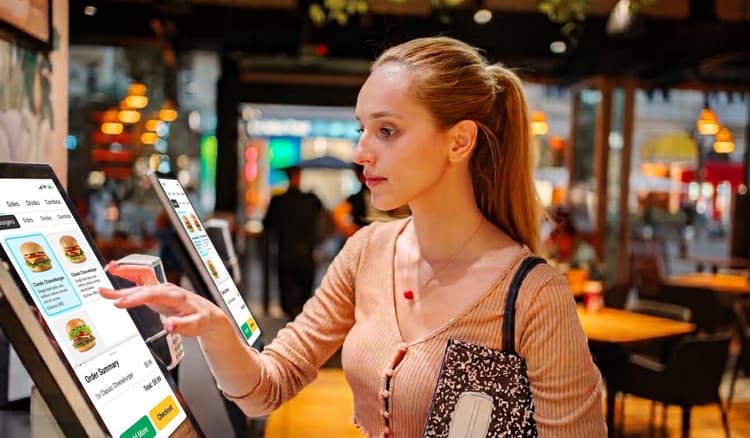
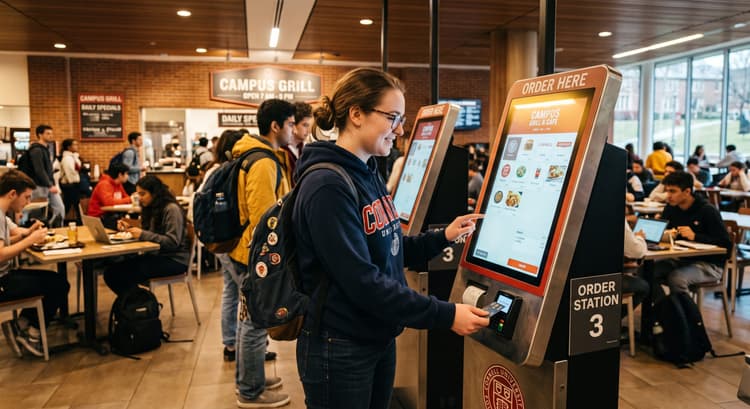
Then look at what your self-service channels are configured to do. Kiosks absorb volume when the counter is short-staffed, but only if they’re set up for holiday conditions. Seasonal items should appear in suggestive-sell prompts. Upsell logic should match what you want to move. Platforms like Bite Lift use AI-driven recommendations to raise check size, and Bite operators see an average check lift of 20 percent or more. That margin matters most on your highest-traffic days.
Holiday traffic also brings larger groups. A family of six ordering at a kiosk can build their order at their own pace, with every modifier captured correctly. Bite’s platform delivers 99 percent order accuracy, which keeps remakes from eating into your busiest hours.
Technology Checklist
Peak Days: A Playbook for Each One
Every holiday peak has its own pattern, and Thanksgiving week shows it best. It’s really four different days. Wednesday brings the travel and reunion rush. Thursday is quiet for most concepts and busy for travel locations. Black Friday is driven by shoppers. Small Business Saturday carries its own local traffic.
Christmas Eve and New Year’s Eve follow their own patterns. Christmas Eve often ends early, with a midday rush from last-minute shoppers. New Year’s Eve shifts volume late into the evening. Each one needs its own playbook too.
A playbook covers staffing levels, prep pars, which items are live, and which locations are open. Give GMs the playbook in writing so decisions don’t depend on who happens to be on shift.
Real-time visibility matters across a portfolio. Decide ahead of time who watches sales and ticket times across stores during peak hours, and who has the authority to act. That person might pull a menu item, shift a team member to a busier nearby store, or extend hours on the spot.
Peak Day Checklist
After the Rush: Capture the Data for What’s Next
Within 72 hours of each peak, run a post-holiday review while the details are still fresh. Compare labor to sales by hour and by location. Check which items sold, which stalled, and how the kiosk, counter, and digital channels split the volume.
Then put it to work. Treat Thanksgiving week as the dress rehearsal for Christmas and New Year’s, and have corrected plans in hand within a week. The stores that missed on staffing or ran out of a top seller are the first ones to fix. After New Year’s, the same review becomes the starting point for next year’s plan.
Post-Holiday Checklist
Start Early, Execute Everywhere
The operators who win the holidays decide early and execute the same way across every store. A restaurant holiday checklist only works if every location follows it, and if your ordering technology holds up when volume peaks.
If you want to see how Bite keeps self-service ordering consistent across a multi-unit portfolio, from holiday LTOs to large group orders, explore the Bite platform or request a demo.