
The QSR industry is at a breaking point. With only 14% of consumers still viewing fast food as budget-friendly and labor shortages forcing 48% of operators to reduce hours, the traditional QSR playbook is quickly becoming obsolete. But here’s what the hardliners miss: the brands that adapt now will dominate the next decade.
This isn’t about tweaking your value menu or running another BOGO promotion. It’s about fundamental transformation. The winners this year and beyond will be those who embrace radical efficiency through automation and technology, create irresistible customer experiences through data, and build operational models that thrive despite economic headwinds.
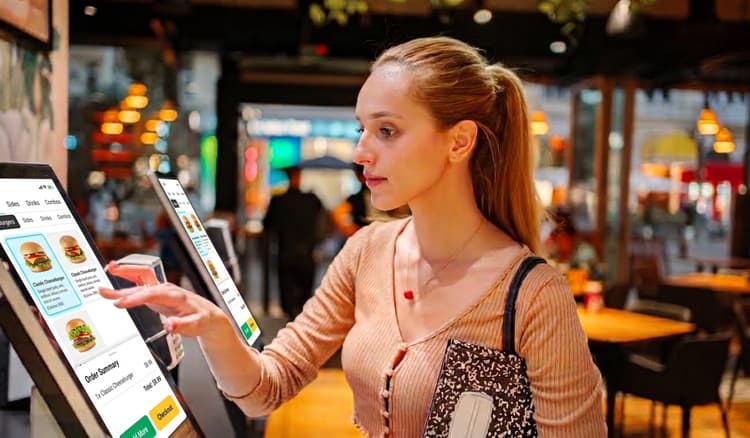
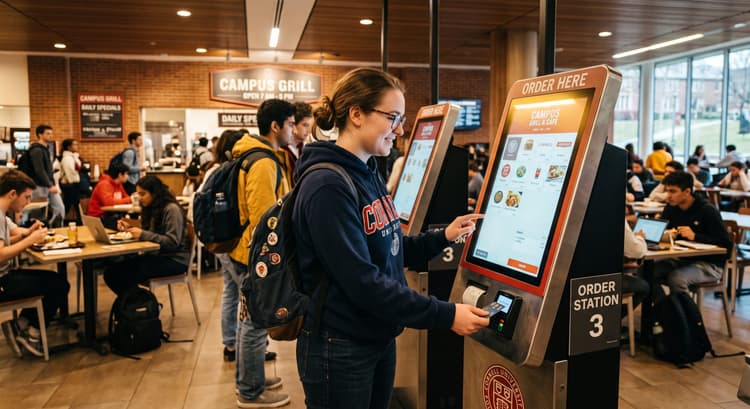
1. Deploy Kiosks as Revenue-Generating Machines
Kiosks aren’t just a labor-saving tool. The data reveals that kiosk orders generate up to 30% higher average tickets than counter orders.
The math is compelling: Research shows that 63% of operators saw higher check sizes specifically attributed to upsell prompts built into self-ordering kiosk software.
The Kiosk Profit Formula:
- Position kiosks prominently near entrances and high-traffic pathways to capture greater adoption
- Partner with companies like Bite, which design intuitive and user-friendly interfaces that naturally guide customers toward premium options
- Implement upselling prompts that highlight add-ons and upgrades, leveraging visual menus that make premium items stand out
- Use data from kiosk orders to identify your most effective upsell combinations and optimize menus based on popular items
- Integrate kiosks with loyalty programs and mobile apps for seamless omnichannel experiences
Don’t make the mistake of viewing kiosks as standalone devices. The biggest ROI comes from higher average checks, personalized upsells, loyalty tie-ins, and more efficient order flow.
2. Turn Ghost Kitchens Into Your Expansion Engine
While competitors struggle with real estate costs, other operators are scaling through ghost kitchens, which offer a big cost advantage. Startup costs range from just $30,000 to $100,000, compared to hundreds of thousands or even millions for traditional restaurants. CloudKitchens, for example, enables establishments to start cooking in as few as 8 weeks with as little as $30,000 initial investment.
Your Ghost Kitchen Game Plan:
- Test new concepts without the risk of full buildouts
- Use ghost kitchens as staging areas for new locations, speeding up construction
- Operate multiple virtual brands from the same kitchen space
- Focus solely on delivery without front-end investments in dine-in facilities, benefiting from smaller footprints, lower rentals, and improved efficiency through shared resources
- Partner with established platforms that handle logistics, cleaning, and maintenance
The most sophisticated operators are running hybrid models—maintaining their flagship locations while using ghost kitchens to penetrate new markets and test menu innovations with minimal risk.
3. Make AI Voice Ordering Your 24/7 Sales Machine
Labor shortages aren’t temporary. The restaurant industry has 1.4 million job openings with turnover approaching 75%. One solution lies in AI voice ordering that’s always clocked in.
Drive-thrus account for as much as 70% of sales at many brands, making even incremental improvements financially significant. Early adopters are seeing game-changing results: For example, Vox AI’s deployments demonstrate ROI increases of up to 17 times, with shorter drive-thru queues, enhanced upselling, and higher customer satisfaction.
Voice AI Implementation Strategy:
- Deploy systems that handle orders 24/7 in multiple languages
- Focus on truly autonomous AI that requires no human intervention during operation
- Implement systems that make more context-specific upsell attempts than human employees
- Ensure seamless integration with existing POS and kitchen systems
- Use AI for both drive-thru and phone ordering (if available) to maximize coverage
The technology is mature and scaling rapidly. Companies like ConverseNow, Kea, and SoundHound AI are all competing for market share, driving innovation and reducing costs.
4. Leverage Data for Hyper-Personalization
Generic marketing is dead. Brands running 200 experiments monthly gain insights that would take traditional marketers years to uncover, with successful personalization delivering 20-30% improvements in conversion.
The opportunity is massive: QSRs using AI-powered predictive analytics for personalized marketing see double-digit lifts in click-through rates and average ticket increases that flow directly to the bottom line.
Your Data Domination Playbook:
- Centralize data from POS systems, mobile apps, and delivery platforms into a unified platform for complete customer visibility
- Use predictive analytics to anticipate demand and optimize inventory
- Test creative variations at scale—one QSR evaluated 320 variations in 18 days, achieving a 22% increase in customer acquisition at 31% lower cost
- Create location-specific profiles to understand local preferences and behaviors
- Leverage AI to deliver personalized offers that drive higher open rates and millions in incremental revenue
Remember: Those who are nailing personalization are growing 40% faster than their counterparts.
5. Automate Everything That Doesn’t Require a Smile
Beyond front-of-house automation, the real efficiency gains come from comprehensive back-of-house transformation. The global robot kitchen market is projected to reach $9.6 billion by 2033, growing from $2.7 billion in 2023.
Automation Priority List:
- Online ordering systems that integrate directly with POS and kitchen displays, eliminating manual order entry
- Robotic kitchen systems for grilling, frying, and plating
- AI-powered workforce optimization that balances employee availability with demand, reducing labor costs while improving efficiency
- Automated inventory management with predictive ordering
- Labor management software that handles scheduling, time tracking, recruiting, and payroll
The key is strategic implementation. Start with your most time-consuming, repetitive tasks to see immediate efficiency gains, then expand systematically.
6. Rethink Your Menu as a Profit Engine
With nearly 1 in 4 consumers now viewing fast food as a “treat” or “reward”, your menu strategy must evolve beyond basic value plays.
The Profit-Maximizing Menu Framework:
- Create a barbell strategy: rock-bottom value items paired with premium, high-margin options
- Add unique twists to familiar favorites. For example, when chains introduce premium items like wagyu or truffle fries, 30% of consumers express excitement, jumping to 42% among parents
- Use data to identify and eliminate low-performing items
- During labor shortages, analyze menu items to identify the most popular dishes and purge slow-moving ones, particularly those requiring multiple cooking steps
- Design limited-time offers that create urgency without cannibalizing core items
Your menu should tell a story that resonates with both value-seekers and experience-chasers.
7. Build Loyalty Programs That Drive Behavior
Traditional points-based programs are table stakes. Modern loyalty requires sophistication. 80% of QSR operators say traditional loyalty isn’t working for their brand.
Next-Generation Loyalty Tactics:
- Use personalized offers based on purchasing history and real-time behavior
- Implement subscription models for frequent customers (unlimited drinks, meal bundles)
- Integrate gamification and real-time rewards to keep customers engaged
- Create exclusive experiences and early access to new items for top-tier members
- Use integrated platforms that combine loyalty with ordering data to optimize staffing and maintain service standards
The best programs create emotional connections beyond transactions. Think community, not just coupons.
The Bottom Line
The QSR industry is undergoing its most significant transformation since the invention of the drive-thru. Economic pressures, labor challenges, and evolving consumer expectations are forcing a complete reimagining of the business model.
But within this disruption lies unprecedented opportunity. Brands willing to embrace automation & technology, personalization, and new operational models aren’t just surviving—they’re positioning themselves to capture market share from their competitors.
The question isn’t whether to transform, but how quickly you can execute. Every day you delay is a day your competitors pull further ahead. The playbook is clear, the technology is proven, and the market rewards for early movers are substantial.