
The American foodservice landscape is experiencing a period of unprecedented transformation as technology adoption, labor pressures, and evolving consumer expectations converge to reshape how we eat out. From quick-service restaurants deploying AI-powered drive-thrus to convenience stores positioning themselves as legitimate breakfast destinations, the traditional boundaries between dining segments are blurring faster than ever before.
As we move through 2026, restaurant operators face a market defined by cautious consumers, intense value competition, and the imperative to do more with less. Traffic growth is expected to remain below 1 percent this year, forcing brands to compete for market share rather than rely on overall industry expansion. At the same time, pricing across segments has converged around the critical $10-$12 threshold, creating fierce competition between fast casual, QSR, and even casual dining concepts.
The winners in this environment will be operators who successfully balance technology investment with operational excellence, labor optimization with elevated guest experiences, and value pricing with quality perception. Here’s what’s shaping each major segment in 2026.
Fast Casual Trends

Hybrid Dining Models Blur the Line Between Fast Casual and Full Service
Fast casual restaurants are increasingly adopting elements traditionally associated with full-service dining as they seek to justify premium price points and differentiate from value-focused competitors. This includes table service options with QR code ordering, premium beverage programs featuring craft cocktails and curated wine selections, and extended daypart offerings that allow them to compete with traditional restaurants during breakfast and late-night hours.
However, this evolution comes with challenges. Fast casual traffic slowed from 3.3% growth in December 2024 to just 1.7% in October 2025, with consumers increasingly questioning the value proposition of $15-$20 entrees. Leading brands are responding by emphasizing experience over pure convenience. The most successful concepts are creating “third place” environments with comfortable seating, WiFi access, and work-friendly amenities that justify higher price points through enhanced ambiance rather than just food quality.
AI-Powered Kitchen Operations Optimize Labor
With labor remaining one of the industry’s most persistent challenges, fast casual operators are turning to artificial intelligence to streamline back-of-house operations. Roughly one-third of restaurant operators in 2026 already use AI technologies, while nearly half plan to adopt them in the near term, focusing on predictive inventory management, automated prep scheduling based on demand forecasting, and intelligent kitchen display systems with AI-powered routing.
These investments are paying off. AI automation can trim 15-50% of labor hours in targeted workflows, according to data from successful implementations. The technology allows restaurants to predict demand patterns, optimize staffing levels, and reduce waste—all critical capabilities in an environment where margins are under constant pressure. Kitchen display systems enhanced with AI can now route orders to specific stations based on real-time capacity, crew skill levels, and equipment availability, significantly improving throughput during peak periods.
Sustainability Moves from Marketing to Operations
Environmental initiatives are shifting from customer-facing marketing messages to core operational practices. Fast casual brands, which have historically positioned themselves as more environmentally conscious than traditional QSRs, are now implementing zero-waste kitchen initiatives, renewable energy installations, and sourcing strategies that prioritize local suppliers as standard practice rather than premium positioning.
This operational focus on sustainability serves dual purposes: it reduces costs through waste reduction and energy efficiency while meeting consumer expectations for environmental responsibility. The key difference from previous “green” initiatives is that sustainability is now embedded in operations rather than marketed as a premium feature. Brands are finding that customers increasingly expect sustainable practices as table stakes rather than differentiated benefits worth paying extra for.
Loyalty Programs Become Revenue Centers
Fast casual operators are transforming loyalty programs from customer retention tools into significant revenue drivers. Subscription-style loyalty programs are lowering marketing expenses while increasing visit frequency, with some major chains reporting that loyalty members account for more than half of total sales.
The evolution includes tiered membership structures with exclusive menu access, early access to limited-time offers, and personalized pricing based on individual purchase patterns. Data-driven personalization allows brands to deliver hyper-personalized guest experiences that drive both frequency and average check. The most sophisticated programs use AI to predict when individual customers are most likely to visit and what offers will drive incremental purchases, transforming loyalty from a defensive retention tool to an offensive growth driver.
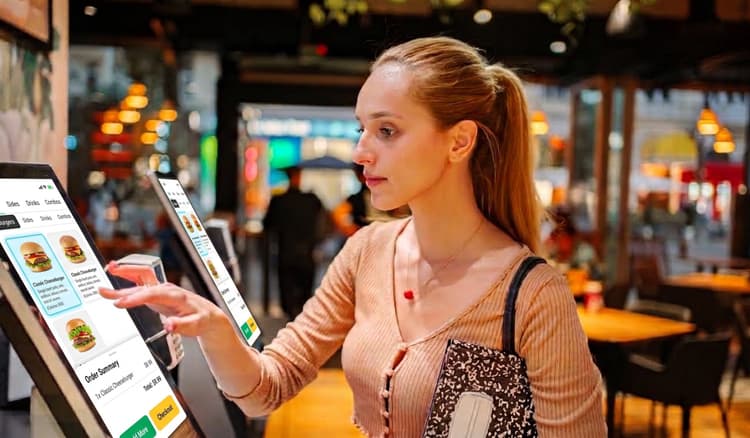
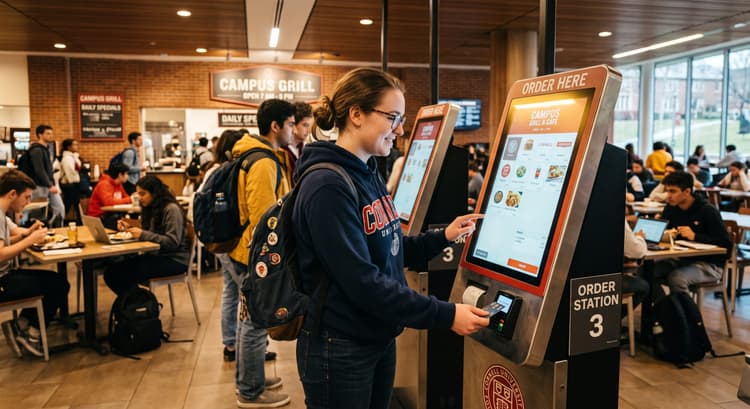
For instance, the hardware enabling this personalization, such as self-service kiosks, is becoming increasingly sophisticated.
“When tied to loyalty programs, facial recognition or visual identification can have returning customers opt-in to receive customized menus, preferred item shortcuts, or targeted promotions the moment they approach the kiosk,” notes Jared Epstein, Account Executive at Frank Mayer – Kiosks and Displays.
QSR Trends

Drive-Thru 2.0: Multi-Channel Order Fulfillment
Quick-service restaurants are fundamentally reimagining the drive-thru as an omnichannel fulfillment center rather than a single-purpose service lane. Drive-thru and delivery channels now account for over 70% of revenue at leading QSR brands, driving massive investments in dedicated mobile order pickup lanes, AI voice ordering systems, and outdoor kiosk ordering with curbside pickup options.
The technology transformation is particularly evident in voice AI adoption. Voice ordering is crossing a critical threshold in 2026, moving from experimental technology to essential infrastructure, with pizza and high-volume takeout categories already seeing 26%+ phone revenue increases. New drive-thru designs feature dual lanes with separate routing for mobile orders versus traditional ordering, cutting transaction times to under 90 seconds while increasing throughput by up to 18% in pilot markets.
Operators are also rethinking store layouts, dedicating just 25% of floor space to seating while investing in walk-up windows and curbside pickup infrastructure that maximizes revenue per square foot without expanding the building footprint.
Premium Menu Stratification
QSR brands are breaking away from traditional value-focused positioning by introducing elevated ingredients, limited-time collaborations with celebrity chefs and brands, and tiered pricing structures featuring “signature” product lines. Burger King’s partnerships with entertainment properties like SpongeBob demonstrate how major chains are using branded collaborations to create buzz and justify premium pricing.
This trend reflects QSRs’ attempt to compete with fast casual concepts on quality while maintaining speed advantages. Chains are developing dual-tier menus with both value-priced basics and premium offerings that allow customers to trade up when they’re willing to spend more. The key is maintaining the operational simplicity and speed that define quick service while incorporating ingredients and preparations traditionally associated with higher-end concepts.
Ghost Kitchens Come In-House
Rather than ceding delivery-only concepts to third-party ghost kitchen operators, QSR brands are launching their own virtual concepts from existing locations. This allows chains to maximize utilization of their kitchen capacity, particularly during off-peak hours, while testing new menu concepts with minimal capital investment.
The strategy includes dual-brand operations in single footprints and daypart-specific brands that optimize kitchen use throughout the day—breakfast concepts that transition to lunch and dinner offerings in the same space. By controlling the virtual brand experience in-house, QSRs maintain quality standards and capture margin that would otherwise go to third-party kitchen operators.
Labor Technology Goes Beyond POS
The highest-impact investments for 2026 will be those that simplify, strengthen, and scale operations, with technology extending far beyond traditional point-of-sale systems. Automated beverage stations and robotic fry cooks are moving from pilot programs to scaled deployment, while employee scheduling AI optimizes shift coverage based on predicted demand patterns.
Cross-training support tools help crew members quickly learn new stations, improving operational flexibility in an environment where 80% annual restaurant turnover makes it impossible to reliably staff all positions. IoT-enabled equipment monitoring tracks fryer oil quality, refrigerator compressor performance, and other indicators that allow predictive maintenance rather than reactive repairs. These technologies collectively reduce labor requirements while improving consistency and reducing downtime.
C-Store Trends

Breakfast as a Destination Daypart
Perhaps no trend is more transformative for convenience stores than their aggressive positioning as breakfast competitors to traditional QSRs. C-stores are stepping up their breakfast game, with chains like 7-Eleven debuting breakfast lineups featuring pearl sugar-studded Belgian waffle sandwiches, breakfast tacos, and other offerings that could be right at home in fast casual restaurants.
At breakfast, consumers typically want speed, predictability and value—all attributes convenience stores are known for. Full-service restaurant concepts within c-store footprints now feature made-to-order breakfast sandwiches, premium coffee bars that rival specialty cafes, and bakery programs with fresh pastries.
The technology enabler making this possible is self-service kiosks, which manage morning rush complexity while maintaining the speed customers expect from convenience stores. 66% of customers wish they could get made-to-order food from a convenience store, with Gen Z showing particularly strong demand. Extended breakfast hours capture late-morning and “second breakfast” occasions that traditional restaurants often miss, with some locations serving breakfast items well into the afternoon.
For convenience stores, kiosk hardware faces unique operational demands. “In convenience stores, reliability is the top priority. Many locations operate 24/7 and experience sustained, high-traffic usage, which places significant wear on hardware,” explains Epstein. “We’re seeing strong demand for both self-checkout and self-order kiosks as C-stores expand foodservice offerings. In many cases, they’re starting to resemble QSR environments—something that’s obvious when you look at brands like Wawa, where speed, consistency, and uptime are critical.”
Fresh Food Programs Mature Into Core Business
Foodservice is no longer just an add-on; it is a primary draw for modern convenience stores. Retailers are moving beyond grab-and-go prepared foods to offer chef-driven concepts with in-house food preparation capabilities, including bakeries and full kitchens. Foodservice sales made up 27.7% of in-store sales at convenience stores in 2024 and 38.6% of in-store gross margin, making it one of the most important profit drivers for the channel.
Leading c-store operators are developing proprietary menu items that create brand differentiation rather than relying solely on branded food partners. This requires understanding local taste preferences, predicting demand patterns, managing inventory with precision to minimize waste, ensuring food safety compliance, and maintaining quality standards across multiple locations—operational challenges that mirror full-service restaurant operations.
EV Charging Stations Reshape Store Design
The proliferation of electric vehicle charging infrastructure is fundamentally changing convenience store customer behavior and facility design. Extended dwell times of 20-30 minutes during charging sessions require enhanced amenities beyond traditional grab-and-go offerings. Operators are responding with premium food offerings designed specifically for charging customers, digital ordering integration that allows customers to place orders from their vehicles, and comfortable seating areas with WiFi and work-friendly environments.
This shift creates opportunities to increase average transaction values by offering customers more sophisticated food and beverage options during what would otherwise be idle time. The key is designing the experience around the customer’s need state during the charging period rather than the traditional quick-in-and-out convenience store visit.
Third Place Positioning with Indoor Dining
Following the lead of successful European c-store chains, American convenience stores are investing in comfortable seating, premium WiFi, and work-friendly environments that position them as community gathering spaces beyond transactional fuel stops. Coffee shop ambiance competing directly with enterprise coffee chains includes specialty coffee programs, pastry cases, and environments designed for lingering rather than rushing.
This “third place” strategy—creating spaces that serve as social hubs between home and work—allows c-stores to capture different day parts and occasions. Morning coffee meetings, remote workers seeking afternoon workspaces, and evening social gatherings all represent new occasions that traditional convenience stores rarely captured. The investment in environment and amenities is justified by higher average transaction values and increased visit frequency from customers who view the location as a destination rather than just a pit stop.
Age Verification Technology for Alcohol & Tobacco
Regulatory compliance is driving rapid adoption of age verification technology at self-checkout, including biometric and ID scanning systems that automate compliance while reducing liability and theft. As self-checkout expands throughout convenience stores, operators need solutions built for the unique challenges of convenience retail, like age verification for restricted items, alongside lottery ticket management and fuel pump integration.
These systems reduce both labor requirements and compliance risk by automating a process that previously required employee intervention at every transaction involving age-restricted products. Advanced systems can flag suspicious IDs, maintain audit trails for regulatory compliance, and integrate with existing POS and inventory management platforms.
Payment Technology Gets an Upgrade
Payment technology at kiosks is also evolving rapidly. “We’re seeing the emergence of ‘payment-on-glass’ solutions, where the touchscreen itself functions as the payment device, embedding NFC tap-to-pay directly into the display,” notes Epstein. “These technologies have the potential to reduce hardware complexity, speed up transactions, and simplify kiosk layouts.” Biometric payment options, including palm-based authentication similar to implementations at Whole Foods, are also gaining traction as operators seek to reduce friction in the checkout process.
The Convergence: Technology, Value, and the Blurring of Segment Lines
Three common threads connect these trends across all segments: aggressive technology investment, relentless labor optimization, and unwavering focus on elevated customer experiences that justify pricing in a value-focused market.
Self-service technology serves as a critical connector across fast casual, QSR, and convenience stores. 61% of diners now want more kiosks in restaurants, while studies show order sizes increase 15-30% when customers use self-ordering interfaces. This technology simultaneously addresses labor shortages, improves order accuracy, and drives incremental revenue through strategic upselling prompts—making it one of the highest-ROI investments operators can make.
For restaurant technology providers like Bite, this environment presents a significant opportunity. Solutions that work seamlessly across multiple formats—from fast casual to QSR to convenience stores—that adapt to each segment’s unique operational requirements, and that deliver measurable ROI through increased check sizes, improved accuracy, and optimized labor deployment will be essential partners for operators navigating this complex landscape. The technology that wins in 2026 won’t be the flashiest or most futuristic—it will be the solutions that solve real operational problems, integrate smoothly with existing systems, and deliver results from day one.
Key Data Points
Market Size & Growth Projections:
- U.S. QSR Market: Projected to reach $491.65 billion in 2026, growing to $789.65 billion by 2031 at a 9.94% CAGR (Mordor Intelligence)
- Global QSR Market: Expected to reach $1.16 trillion in 2026, expanding to $1.74 trillion by 2031 at 8.41% CAGR (Mordor Intelligence)
- U.S. Fast Casual Market: Projected to reach $115.5 billion by 2026, growing by $84.5 billion through 2029 at 13.7% CAGR (Technavio)
- Global Breakfast Food Market: Valued at $210 billion in 2026, projected to reach $255 billion by 2030 (Tastewise)
Technology Adoption:
- AI Investment: 38.75% of restaurant executives already investing in AI/ML, with nearly 48% planning adoption soon (Modern Restaurant Management)
- Kiosk Preference: 61% of diners want more kiosks in restaurants, up from 36% two years ago; 72% now comfortable using kiosks (EZ-Chow)
- Digital Ordering: Voice AI and self-service kiosks expected to become industry standard in 2026 (QSR Web)
- Restaurant POS Market: Expected to exceed $62.67 billion in 2026, expanding at 9.5% CAGR through 2035 (Restolabs)
Consumer Behavior:
- Traffic Growth: Less than 1% traffic growth anticipated for 2026, making market share capture critical (Restaurant Dive)
- Value Focus: Pricing convergence around $10-$12 creating intense competition across segments (Restaurant Dive)
- Off-Premise Dining: Drive-thru and delivery channels now account for over 70% of revenue at leading QSR brands (Mordor Intelligence)
C-Store Food Service:
- Foodservice Revenue: Made up 27.7% of in-store sales and 38.6% of in-store gross margin at c-stores in 2024 (Restaurant Business)
- Made-to-Order Demand: 66% of customers wish they could get MTO food from a convenience store, with 72% of those being Gen Z (CStore Decisions)