

How the restaurant industry’s workforce evolved from pandemic chaos to a new normal — and what operators need to know to compete for talent in today’s market
Key Data Points
Employment & Recovery
- 42,000 jobs (0.3%) above February 2020 levels as of February 2026 — National Restaurant Association
- QSR and fast-casual restaurants added 79,000 jobs (2%) above pre-pandemic levels — Escoffier
- 18 states plus D.C. remain below pre-pandemic restaurant employment — National Restaurant Association
- Industry added net 128,800 jobs during 12 months ending February 2026 — National Restaurant Association
Wages & Compensation
- Average hourly wages jumped from $13.36 (April 2020) to $19.93 (December 2025) — Restaurant Dive
- Leisure and hospitality sector wages increased 3.8% year-over-year to $22.70 (April 2025) — OysterLink
- Waiters and servers earn average base wage of $17.56 per hour before tips — OysterLink
- Base wages now make up 43% of restaurant worker pay, up from 35% in January 2020 — ADP Research Institute
- Median hourly wage for waiters/waitresses ($15.36) vs. all-profession median ($23.11) — Kezner Consulting
Labor Shortage & Staffing
- 70% of operators report job openings difficult to fill; 45% don’t have enough employees — NetSuite/National Restaurant Association
- 986,000 job openings in restaurants and accommodations sector (October 2025) — National Restaurant Association
- Restaurant unemployment ranged between 5.5% and 6.8% in recent months — Restaurant Dive
- Turnover rates at 73.9% annually — Toast
Technology Impact
- Urbane Cafe: 22% higher check average on kiosk orders and 5.6% lift in total sales — Bite Case Study
2026 Projections
- Industry projected to add more than 100,000 jobs in 2026, reaching 15.8 million employees — National Restaurant Association
The restaurant labor market has undergone seismic shifts over the past five years. From the devastating pandemic job losses that saw over 3.7 million restaurant workers unemployed in early 2020, to the scramble for talent during the recovery, to where we stand today, restaurant operators have weathered a transformation that fundamentally changed how the industry approaches staffing.
As we navigate 2026, one thing is clear: we’ve reached a “new normal” that looks distinctly different from the pre-pandemic world. The question for operators is no longer “how do we get back to normal?” but rather “how do we thrive in this transformed landscape?”
Let’s examine what’s actually changed, what’s remained stubbornly the same, and what strategies are working for operators who are winning the war for talent.
The Numbers Tell a Complex Story
Employment Has Recovered… Sort Of
The headline news sounds positive: as of February 2026, restaurant employment stands at 42,000 jobs above February 2020 levels, representing a 0.3% gain. While this marks a recovery from the pandemic’s devastating job losses, the modest gains and month-to-month volatility—January saw the industry at 105,000 jobs above pre-pandemic levels before winter weather impacted February—reveal an industry still finding its footing.
But dig deeper, and the picture becomes more nuanced.
Full-service restaurants—the traditional sit-down establishments that were hardest hit during the pandemic—are still struggling to return to pre-pandemic staffing levels. While quick-service and fast-casual restaurants have added 79,000 jobs (2%) above pre-pandemic levels, full-service dining continues to lag behind.
The geographic distribution tells another story entirely. Eighteen states plus Washington D.C. remain below pre-pandemic restaurant employment, led by West Virginia (-6%), Maine (-5%), and New Mexico (-5%). Meanwhile, mountain states like Idaho (+20%), Utah (+14%), and Nevada (+13%) have surged well past their 2020 employment levels.
What This Means for Operators: The recovery isn’t uniform. Your experience depends heavily on your restaurant concept (QSR vs. full-service) and your location. If you’re in a lagging market, you’re competing for an even smaller pool of available workers.
Wages: The Gains Are Real, But Slowing
Perhaps the most significant change in the restaurant labor market is compensation. The numbers are striking:
- Average hourly wages for production and nonsupervisory restaurant workers jumped from $13.36 in April 2020 to $19.68—a nearly 50% nominal increase
- Average hourly earnings in the leisure and hospitality sector increased 3.8% year-over-year, from $21.87 in April 2024 to $22.70 in April 2025
- Waiters and servers now earn an average base wage of $17.56 per hour before tips, with tips making up approximately 69% of their hourly earnings.
The wage surge of 2021-2022, when restaurants saw year-over-year wage growth of 10-15%, has cooled considerably. Wage growth has moderated to more sustainable levels, but the gains made during those years have stuck.
Interestingly, base wages now make up 43% of restaurant worker pay, up from 35% in January 2020, as minimum wage increases and changing tipping behaviors reshape compensation structures.
What’s Changed: Restaurants can no longer compete for talent with pre-pandemic wages. The $15/hour floor that was once debated is now baseline in most markets, with many operators paying $18-20/hour or more.
What Hasn’t Changed: The fundamental wage gap between restaurants and other industries persists. The median hourly wage for waiters and waitresses ($15.36), including tips, is significantly lower than the all-profession median of $23.11, making it difficult to attract talent away from other sectors.
The Labor Shortage: Still Here, But Evolving
Job Openings vs. Available Workers
Despite employment gains, the labor shortage hasn’t disappeared—it’s just evolved. Seventy percent of restaurant operators report having job openings that are difficult to fill, while 45% say they don’t have enough employees to support existing customer demand, according to the National Restaurant Association.
The challenge is structural: there are consistently more job openings than available workers to fill them. While the gap has narrowed from pandemic highs, demand for workers remains elevated. As of October 2025, there were 986,000 job openings in the combined restaurants and accommodations sector, roughly unchanged from earlier months despite ongoing hiring challenges. The industry added a net 128,800 jobs during the 12 months ending February 2026, yet demand for workers continues to outpace supply.
The Turnover Challenge Remains
If there’s one metric that hasn’t fundamentally improved, it’s turnover. The restaurant industry continues to experience some of the highest turnover rates across all sectors.
While turnover rates have decreased from the peak of 2020 to around 73.9% annually, this remains extraordinarily high. To put it bluntly: roughly three out of every four employees will leave within a year.
The financial impact is devastating. Every departing employee costs money in recruitment, training, and lost productivity. With tight margins already squeezed by food costs and rent, high turnover is one expense operators can’t afford but can’t seem to escape.
What’s Changed: The “Great Resignation” has shifted to what experts call the “Great Stay”—workers are staying in their jobs longer, but not necessarily in the restaurant industry.
What Hasn’t Changed: Restaurant work is still fast-paced, physically demanding, and often involves irregular hours. These fundamental aspects of the job contribute to burnout and drive turnover, regardless of economic conditions.
Why Workers Still Aren’t Returning
The pandemic fundamentally reset worker expectations. Many who left restaurant jobs during COVID discovered:
1. Better Work-Life Balance Exists Elsewhere
Other industries like retail and delivery services offer more predictable hours and often better benefits. A gig economy driver can set their own schedule; a retail worker knows they’ll be off by 9 PM. Restaurant work, with its split shifts, weekend requirements, and unpredictable schedules, struggles to compete.
2. Rising Costs of Living Require Higher, More Stable Pay
While wages have increased, inflation has eaten into those gains. Real wages—adjusted for inflation—have increased only modestly since 2018. Workers need not just higher pay, but also predictable pay. The tip-dependent model, while potentially lucrative for some, introduces income volatility that many workers can no longer afford.
3. Health and Safety Concerns Linger
Though COVID restrictions have eased, health and safety concerns continue to influence job choices. Workers in customer-facing roles remain exposed to illness, and some simply aren’t willing to take that risk for restaurant wages.
4. The Job Itself Hasn’t Changed
Perhaps most fundamentally, restaurant work is still restaurant work. It’s physically demanding, often stressful, and involves dealing with difficult customers. No amount of wage increases changes the fundamental nature of the job—and for workers who found alternatives during the pandemic, there’s simply no compelling reason to return.
What’s Actually Working: Strategies from Successful Operators
While the challenges are real, some operators are finding success. Here’s what’s working:
1. Technology as a Labor Multiplier
Smart operators aren’t just trying to fill positions—they’re reducing the number of positions they need to fill in the first place.
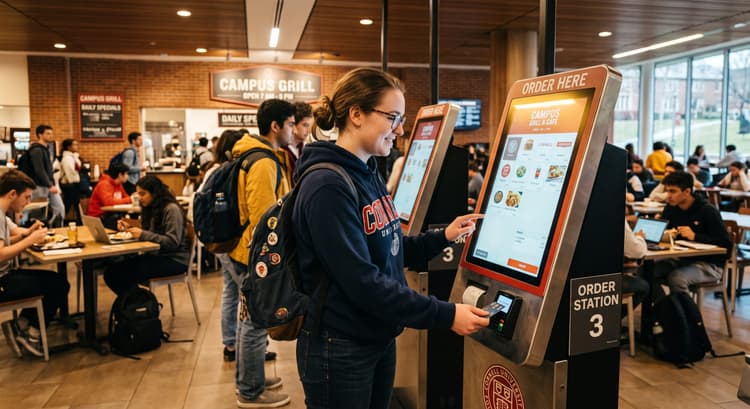
Kiosk ordering systems reduce the need for order-takers, allowing restaurants to maintain throughput with fewer front-of-house staff. This isn’t about eliminating jobs; it’s about reallocating labor to higher-value activities.
Urbane Cafe, a 43-location fast casual chain, reallocated labor at the front of house after implementing kiosks. Locations that previously relied on two cashiers now operate efficiently with one team member serving as a cashier, kiosk ambassador, and guest experience facilitator.
“We used to have two cashiers. Now we really only have one,” says Caprice Kindgren, Director of Marketing at Urbane Cafe. “It’s not like we’re giving worse guest service because there’s a kiosk—you just make sure you’re still welcoming guests.”
The result? A 22% higher check average on kiosk orders and a 5.6% lift in total sales across 16 locations.
Mobile ordering, QR code menus, and contactless payment all serve the same purpose: doing more with the staff you have.
2. Flexible Scheduling and Quality of Life
The operators winning the talent war are those who recognize that competitive wages are table stakes—the real differentiator is quality of life.
Flexible scheduling options that accommodate workers’ needs—whether that’s childcare, school, or other commitments—make restaurant jobs more attractive. Some operators are experimenting with guaranteed minimum hours to provide income stability, while others offer shift-swapping apps that give workers more control.
3. Career Development and Growth Opportunities
Workers, especially younger ones, want to know there’s a path forward. Operators who invest in training programs, create clear advancement paths, and support professional development are seeing better retention.
The key is making these opportunities visible and accessible from day one. Don’t wait six months to tell a new hire they could be a manager—show them the path during orientation.
4. Benefits That Actually Matter
Health insurance, paid time off, and retirement plans were once rare in restaurants. They’re becoming standard among operators who want to compete for talent.
But benefits need to match worker needs. For part-time workers, access to earned wage access (getting paid for shifts already worked before payday) can be more valuable than a 401(k). For parents, childcare assistance or flexible scheduling trumps many traditional benefits.
5. Streamlining the Hiring Process
In a competitive labor market, speed matters. Technology-enabled hiring that streamlines applications and onboarding can be the difference between securing a good candidate and losing them to a competitor who moves faster.
Operators are using SMS-based recruitment, virtual interviews, and streamlined onboarding to reduce time-to-hire from weeks to days.
The Road Ahead: What to Expect in 2026
As we move through 2026, several trends are likely to shape the restaurant labor market:
The Industry Will Stabilize, Not Return
Don’t expect a return to pre-pandemic labor dynamics. The industry is projected to add more than 100,000 jobs in 2026, reaching 15.8 million employees, but the fundamental challenges around wages, turnover, and competition for workers will persist.
Regional Divergence Will Continue
Labor markets will remain highly local. Some states are seeing robust growth while others lag, and this pattern will likely continue. Operators need to understand their local market conditions rather than relying on national trends.
Technology Adoption Will Accelerate
Labor shortages are accelerating technology adoption across the industry. From AI-powered scheduling to robotic kitchen assistants to kiosk ordering, operators are increasingly turning to technology not as a nice-to-have but as a necessity.
The question isn’t whether to adopt labor-saving technology, but which technologies and when.
The War for Talent Will Remain Intense
With low unemployment rates and workers having more options than ever, restaurants will continue competing not just with each other but with every other employer in their market.
The operators who succeed will be those who recognize this reality and adapt accordingly—through better compensation, better work environments, better scheduling, and better use of technology to make their employees more productive.
The Bottom Line
The state of restaurant labor in 2026 is a study in contrasts. Employment has recovered, but not evenly. Wages have increased significantly, yet staffing challenges persist. Workers have more options, but restaurants still need to fill positions.
What’s become abundantly clear is that there’s no going back to 2019. The pandemic permanently reset the labor market, and successful operators are those who’ve accepted this new reality and adapted their strategies accordingly.
The path forward requires a multi-faceted approach:
- Competitive wages and meaningful benefits to attract talent
- Technology to multiply the productivity of the staff you have
- Flexible scheduling and quality-of-life improvements to retain workers
- Efficient hiring processes to move quickly when good candidates appear
- Career development opportunities to build long-term loyalty
The restaurant labor shortage of 2020-2022 may have evolved into something more manageable, but make no mistake: the fundamental challenge of attracting and retaining talent in a competitive market isn’t going away. The operators who will thrive in 2026 and beyond are those who treat labor strategy not as a cost to minimize, but as a competitive advantage to maximize.